
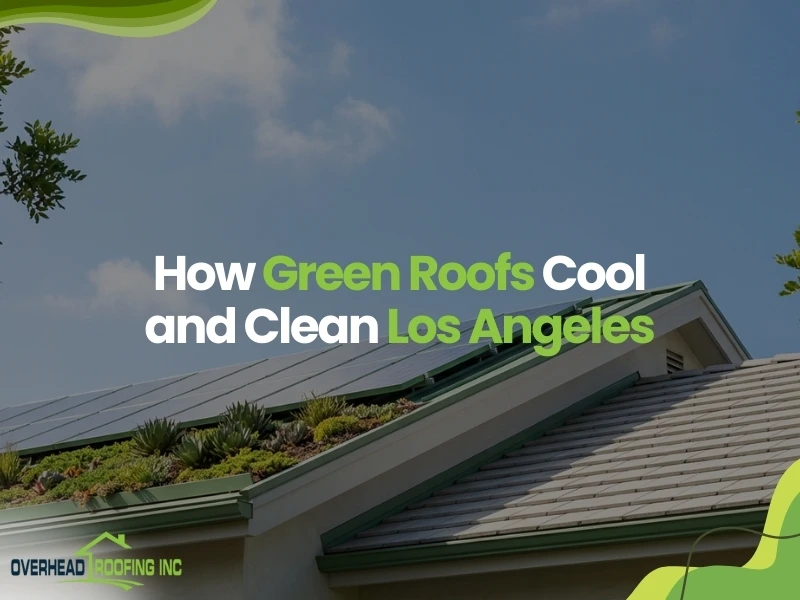
A green roof is a roof covered with plants growing in a layer of soil-like growing medium, built over a waterproof membrane. In Los Angeles they show up on apartment buildings, offices, schools, and some flat-roofed homes. They cool the roof, hold back part of the rain, and add usable space, but they add weight, need water in a dry climate, and depend completely on the waterproofing beneath them.
This guide covers the types of green roofs, the benefits, the structural and waterproofing checks, upkeep in a dry climate, cost drivers, and how a green roof compares with solar panels and a cool roof.
Extensive vs. Intensive Green Roofs
The U.S. Environmental Protection Agency (EPA) describes two main types:
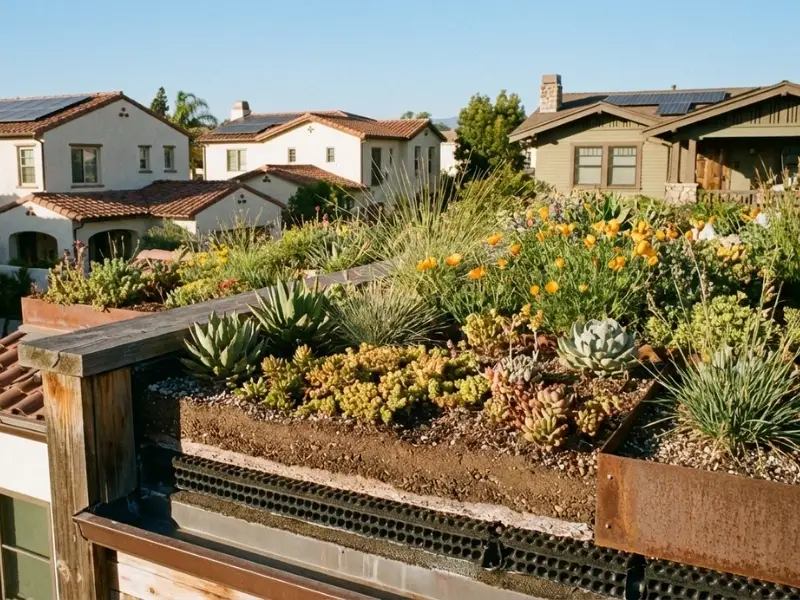
- Extensive green roofs are simpler, with hardy plants such as sedums and native succulents in 2 to 4 inches of growing medium. They are the lightest option, need the least added structure, and need little upkeep once the plants are established.
- Intensive green roofs are deeper rooftop gardens, sometimes with trees, paths, and seating. They are much heavier and need more structural support and more care.
The EPA notes that a simple extensive roof without public access can cost one-tenth to one-third as much to build as an intensive roof meant for people to use.

Benefits of a Green Roof in Los Angeles
- A cooler roof. The EPA reports green roof surfaces can be far cooler than conventional roofs on a hot day, which lowers the heat that reaches the floor below.
- Less runoff. The planted layer holds back part of each storm, more in small storms than large ones, which eases the load on drains.
- A protected membrane. The growing medium shields the waterproofing from sun and heat swings.
- Usable space. An intensive roof can add outdoor space on a building with no yard.
- Less urban heat. Planted roofs help cool the air around them in dense neighborhoods.

Weight: Check the Structure First
Growing medium, plants, drainage layers, and the water they hold add a lot of weight to a roof, and the weight is highest when everything is soaked after rain or irrigation. Most existing roofs in Los Angeles were not designed for that load. Before any green roof, a licensed structural engineer should check the framing or slab and size the system to what the building can carry. In the City of Los Angeles and most other cities, adding this kind of load means plans and a building permit.
The Waterproofing Underneath Matters Most
Once a green roof is planted, finding and fixing a leak means moving soil and plants. That is why the layers under the plants matter more than the plants:
- A sound roof deck with slope to the drains.
- A waterproofing membrane rated for use under a green roof, fully adhered so water cannot travel under it.
- A root barrier so roots cannot work into seams.
- A flood or leak test of the membrane before anything goes on top.
- Drainage layers and clear drains, with gravel strips and access around drains, walls, and penetrations.
- Flashings carried well above the growing medium at walls, curbs, and parapets.
If the existing roof is near the end of its life, replace it first. A green roof is a poor place to discover an old leak. See roof and deck waterproofing and flat roof replacement.
Irrigation and Upkeep in a Dry Climate
Los Angeles gets most of its rain between about November and March, and summers are long and dry. Most green roofs here need irrigation, usually drip, to keep plants alive through summer, and drought-tolerant plants to keep water use down. Regular upkeep includes weeding, replacing dead plants, clearing drains, and checking that irrigation lines are not leaking onto the membrane. Dry, dead plant material on a roof is also a fire concern in wildfire areas, so keep it cleared.
Green Roof vs. Solar Panels vs. a Cool Roof
| Green roof | Solar panels | Cool roof | |
|---|---|---|---|
| Main benefit | Cooler roof, less runoff, usable space | Produces electricity | Reflects heat at low added cost |
| Added weight | High | Low to moderate | None |
| Upkeep | Plants, irrigation, drains | Panel cleaning, inverter | Washing and recoating over time |
| Roof access for repairs | Difficult | Panels may need removal | Easy |
They can also be combined, with solar panels over part of a green roof, but that needs careful structural and layout design. For most building owners whose main goal is a cooler building and lower energy use, a reflective roof is the simplest step. See California cool roof requirements and preparing a roof for solar panels.
What Drives the Cost of a Green Roof
- Extensive or intensive design, and the depth of growing medium.
- Structural engineering and any reinforcement the building needs.
- Replacing or upgrading the roof membrane before planting.
- Root barrier, drainage layers, and leak testing.
- Plants, irrigation, and access for maintenance.
- Getting materials onto the roof, permits, and inspections.
Green Roof Questions
What is a green roof?
A roof covered with plants growing in a layer of growing medium, built over a waterproof membrane with a root barrier and drainage layers.
Do green roofs leak?
The plants do not cause leaks; failures come from the membrane, flashings, and drains underneath. A fully adhered membrane, a root barrier, and a leak test before planting are what prevent problems.
Can my building support a green roof?
Only a structural engineer can say. Saturated growing medium and plants add a lot of weight, and most existing roofs were not designed for it.
Is a green roof better than solar panels?
They do different jobs. Solar produces electricity; a green roof cools the roof, holds back stormwater, and can add usable space. Some buildings combine them.
Do green roofs need water in Los Angeles?
Usually, yes. Most need irrigation to get through the dry summer, even with drought-tolerant plants.
Planning a green roof on a flat roof? Overhead Roofing can inspect the existing roof and replace or waterproof it before the planted layers go on. Call (877) 557-7778 to schedule an inspection.


