
Overhead Roofing » Tile Roofing
Clay and Concrete Tile Roofing in Los Angeles
Repair, reset, and replacement for clay and concrete tile roofs, from barrel tile on older Spanish-style homes to concrete S-tile on newer ones. Estimates are free.
- Licensed, bonded & insured
- CSLB #1119699 (C-39)
- BBB Accredited, A rating
Tile Roofing Contractor for Clay and Concrete Roofs
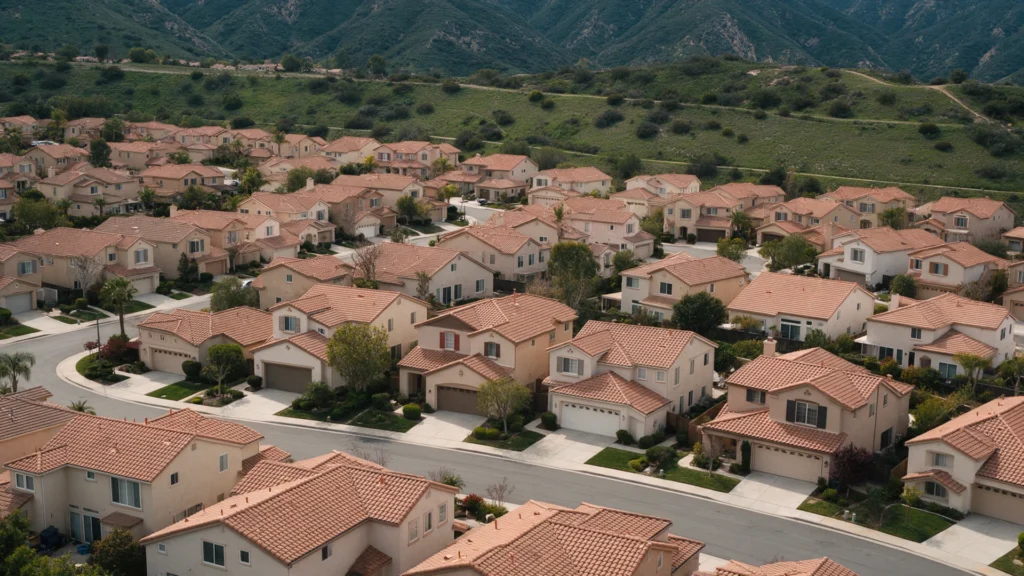
Tile roofing in Los Angeles ranges from clay barrel tile on older Spanish-style homes to concrete S-tile and flat tile on newer ones. We repair, reset, and replace clay and concrete tile roofs, and every tile estimate starts with the layer most owners never see: the underlayment beneath the tile.
Clay and concrete tile is durable, but the tile is not the waterproof layer of the roof. The sections below cover the tile types you will find in Los Angeles, why tile roofs leak, and how a repair, a reset, and a full replacement differ. They also cover what to check before switching to tile or reroofing in a fire hazard zone.
S-tile, barrel, and flat
Underlayment, not the tile
LADBS express permit
CSLB #1119699 (C-39)

Tile Roof Installation
New clay or concrete tile roofs with the decking, underlayment, and flashing they need.
Tile Roof Repair
Cracked and slipped tiles, loose ridge tiles, and failed flashing.
Tile Roof Replacement
When the underlayment or the tile itself is worn out across the roof.
Clay, Concrete, and Spanish S-Tile Roofs in Los Angeles
Clay tile
Clay tile roofing uses tile made of fired clay. Unglazed clay gets its color from the clay itself, so it holds its look as it ages. It costs more than concrete, and an older clay profile or color can be hard to match once it has been discontinued.
Concrete tile
Concrete tile roofing uses tile made of sand, cement, and water. The color is either mixed through the tile or applied as a surface coat, and a surface coat can wear over time. Concrete tile usually costs less than clay and comes in profiles that imitate clay, slate, and wood shake.
The three common profiles
Both materials come in three main shapes:
- Spanish S-tile. A one-piece, high-profile tile with an S-shaped curve, laid in overlapping rows.
- Barrel tile (two-piece mission). Separate pan and cover tiles: half-round pans laid face up, with covers set over the joints between them.
- Flat tile. A low-profile tile that can resemble slate or shake.
Profile also affects repairs. S-tile and barrel tile leave open ends at the eaves that need bird stops, and two-piece barrel tile has more pieces to lift, store, and relay during a reset.
Why the Underlayment Wears Out Before the Tile
On a tile roof, the tile sheds most of the water and shades what lies beneath it. The underlayment, the membrane between the tile and the roof deck, is the waterproof layer. Rain that blows or wicks past the tile runs down the underlayment to the eaves.
The tile usually outlasts that underlayment. Older felt underlayment dries out, tears around nails, and cracks where it bends over ridges and into valleys. Once that happens, a tile roof can leak with every tile still in place, and replacing tiles will not stop it. Typical signs are leaks during long or wind-driven storms, stains below valleys and chimneys, and brittle or torn underlayment visible at the eaves or under a slipped tile.
Why foot traffic breaks tile
Tile handles the loads it was designed for, but it can crack when someone steps in the wrong place. The tile industry’s installation guidance says to put weight only on the head of the tile, where the courses overlap and the tile is supported. A step in the unsupported middle of a tile, or on the crown of a barrel cover, can crack it, and the crack may not show until it lets water through. Our roofers step only where the tile is supported. If a painter, cable installer, or solar crew needs to be on your roof, ask how they plan to walk it.
Tile Repair, Tile Reset, or Full Replacement
Most tile roof work falls into one of three jobs, and the condition of the underlayment decides which one fits.
Repairs to tile and flashing
Cracked, slipped, or broken tiles, loose hip and ridge tiles, and worn flashing are repair work as long as the underlayment underneath is sound. Chimneys are a common weak point, because the flashing has to seal a masonry wall to a curved tile surface. On a clay tile roof in Walnut, the job included repairing the clay tile and installing new flashing around the chimney. Our tile roof repair page covers repairs in detail.
Tile reset: new underlayment, same tile
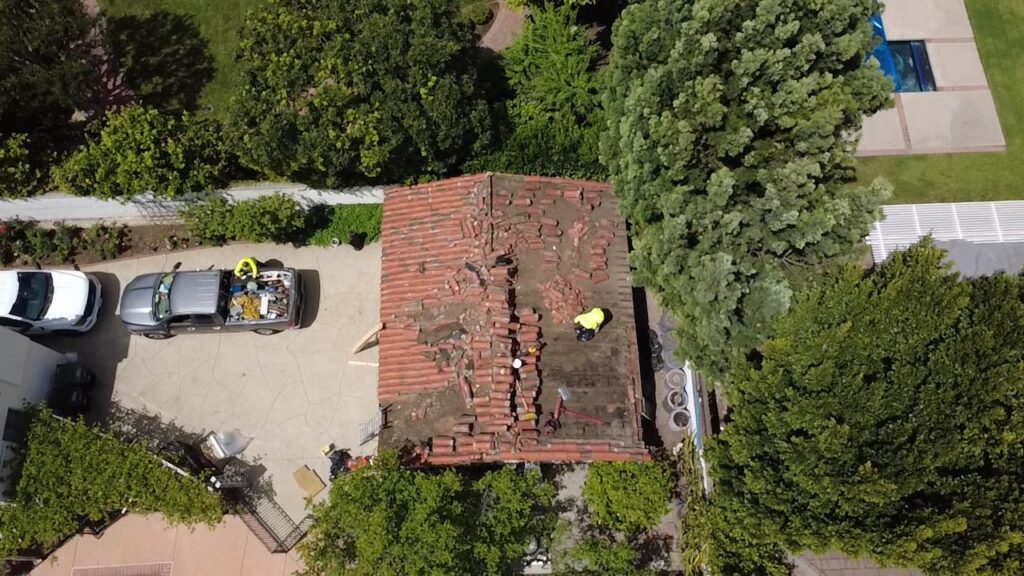
When the tile is in good shape but the underlayment has failed, the usual fix is a tile reset, also called a lift and relay. The crew lifts the tile and stacks it, repairs any damaged decking, installs new underlayment, replaces the flashing at valleys, walls, chimneys, and vents, and lays the good tile back down. Some tile breaks along the way, so replacements are matched as closely as possible. We reset a clay tile roof this way in San Marino. In the City of Los Angeles, LADBS lists removing roof tile, applying new underlayment, and resetting the tile as an express permit item, and cool roof compliance is not required for it.
Full tile roof replacement
When the tile itself is failing, with cracking across many slopes or a worn-out concrete surface, or when you want a different profile or material, the roof is replaced. See tile roof replacement for that process.
Call our 24/7 line. We offer fast response, with same-day visits when crews are available.
Switching to a Tile Roof: Weight, Structure, and Permits
Tile is much heavier than asphalt shingles, so a house framed for shingles is not automatically ready for tile. The tile industry’s installation manual states that the roof structure must be adequate to support the load of tile, and an engineer may need to evaluate the rafters before the switch.
The weight also shows up in the permit. In the City of Los Angeles, the LADBS express reroof permit, issued without plan check, applies to roof coverings that weigh less than 6 pounds per square foot. Ask whether the tile you are considering falls under that limit; if it does not, expect plan review before work can start.
New tile roofs, including decking, underlayment, flashing, and the tile itself, are covered on our tile roof installation page. Our guide on switching from shingles to tile explains the structural questions in more detail.
Fire Ratings and Historic District Rules for Tile Roofs
Clay and concrete tile do not burn, and CAL FIRE lists tile among the common Class A roof coverings. Class A is the highest of the three fire ratings (A, B, and C) that come from standard fire tests, and it applies to the tested assembly of tile and underlayment. It is what the code requires on tile roofs in a Very High Fire Hazard Severity Zone.
Profiled tile has one more requirement. The curve of S-tile and barrel tile leaves gaps at the eaves between the tile and the roof deck, and embers can blow into them. In these zones the code requires that space to be fire-stopped or otherwise protected, and CAL FIRE advises filling the gaps between the roof covering and the sheathing on any home. On tile roofs that usually means bird stops at the eaves.
Historic districts and some HOAs control roof material, color, and profile, and they may require clay tile to be replaced in kind. Check with your city’s planning department or your HOA before choosing a new tile. Our guide to historic district rules for slate and clay tile explains what to expect.
What to Ask a Tile Roofing Contractor in Los Angeles
A tile roofing contractor should answer these questions clearly before you sign:
- Is your license active, with the C-39 Roofing classification? Any contractor’s license can be looked up on the CSLB website; ours is CSLB #1119699.
- What happens to the underlayment? A bid that only replaces tiles may not stop a leak if the underlayment has failed.
- How will breakage be handled? Ask how many replacement tiles the price includes and where matching tile will come from.
- Which flashings will be replaced? Valleys, chimneys, sidewalls, and pipe flashings should be listed in the scope.
- Who pulls the permit? A reset or a reroof needs one, and the estimate should say so.
- What warranty covers the work? Our tile work carries a workmanship warranty.
A good tile roofing company will also tell you when a few new tiles are enough and when they are not. Overhead Roofing is licensed, bonded, and insured, and BBB Accredited with an A rating.

Our Reviews
Posted on GoogleTrustindex verifies that the original source of the review is Google. I live in Alhambra and had a few broken tiles after a windstorm. William and Mike from Overhead Roofing Inc came highly recommended, and now I know why. They handled the repairs quickly and thoroughly, and even checked nearby spots without being asked. Sherry from the office made billing and follow-up a breeze. I’ll be using them again for a full re-roof in the futurePosted on GoogleTrustindex verifies that the original source of the review is Google. Great, thank youPosted on GoogleTrustindex verifies that the original source of the review is Google. Our office in Sierra Madre started having ceiling leaks. Overhead Roofing Inc sent Sean and Mike, who discovered the issue was actually with the parapet wall flashing. They fixed it and gave us solid maintenance recommendations. Tammi kept everything on time and within budget. Their knowledge and clarity made a huge difference.
Get a Tile Roofing Estimate
Tell us whether the roof is clay or concrete tile, how old it is, and whether it is leaking. Call (877) 557-7778 or use the form below. Overhead Roofing is licensed, bonded, and insured (CSLB #1119699, C-39), and estimates are free.
Get Your Free Estimate
Please fill out the form below, or call: (877) 557-7778
Please fill out the form below, or call:
(877) 557-7778
Need Roof Repair or Replacement? Get a Free Estimate Today!
Don’t wait until a minor issue turns into a significant expense. At Overhead Roofing CA, we make it easy to get expert service fast with no pressure and no hidden fees. From routine roof maintenance to full tear-offs and installations, our team handles every project with precision, honesty, and care.
We specialize in helping LA homeowners and business owners protect their most valuable assets with dependable roofing solutions that last. Our licensed contractors are standing by, ready to inspect your roof, answer your questions, and provide a clear action plan all at no cost to you.
Residential roof repair & replacement
Commercial roofing inspections & upgrades
Emergency leak response & storm damage repair
Financing options available for every budget
Tile Roofing Questions From Los Angeles Homeowners
Is Spanish tile the same as clay tile?
Not always. “Spanish tile” describes the shape, usually a one-piece S-tile or a two-piece barrel (mission) tile, and both shapes are made in clay and in concrete. Clay is fired and usually costs more; concrete is cement-based and is often made to imitate clay. A roofer can tell which you have by looking at a broken edge or the underside of a tile.
How long does a tile roof last in Los Angeles?
The tile and the underlayment wear out on different schedules. Clay and concrete tile can stay in service for decades if nobody breaks it, but the underlayment beneath it wears out much sooner, and that is usually what decides when a tile roof needs work. A tile reset replaces the underlayment and reuses the sound tile, so the roof gets a new waterproof layer without all new tile.
Can you match old or discontinued roof tile?
Often, though not always perfectly. We start with current tile in the same profile and the closest color. For discontinued clay profiles, salvaged tile is sometimes the closest match. During a reset, sound tile from the back of the house can be moved to the front so any new tile ends up on the least visible slopes.
Who can I call for a clay tile roof emergency in Los Angeles?
Our emergency line, (877) 557-7778, is open 24/7. We offer fast response, with same-day visits when crews are available. On a tile roof, emergency work usually means covering the leaking area or replacing broken tile to keep water out until a permanent repair or reset can be scheduled. Please do not climb onto wet tile yourself, because it is slippery and breaks easily.
Does a tile roof need maintenance?
Yes, though most of it is simple. Keep valleys, gutters, and the area behind chimneys clear of leaves so water can drain. After strong winds, look from the ground for slipped or broken tiles and loose ridge tiles. Keep foot traffic on the roof to a minimum, and have the underlayment checked when a leak appears or the roof is getting older, because that is the part that wears out.
Serving All of Southern California
Choose your county to see the cities and roofing services near you.