
Overhead Roofing » Silicone Roof Coating
Silicone Roof Coating in Los Angeles
Silicone roof coating for flat, low-slope, metal, and commercial roofs across Los Angeles County, applied by an ASC Certified Contractor. Estimates are free.
- ASC Certified Contractor
- CSLB #1119699 (C-39)
- Licensed, bonded & insured
Silicone Roof Coating Contractor in Los Angeles County
Silicone roof coating renews a flat, low-slope, or metal roof that is worn on the surface but still dry and solid underneath. Once the roof is cleaned and repaired, liquid silicone is sprayed or rolled over it and cures into a continuous white layer that reflects sunlight and holds up where water ponds after rain.
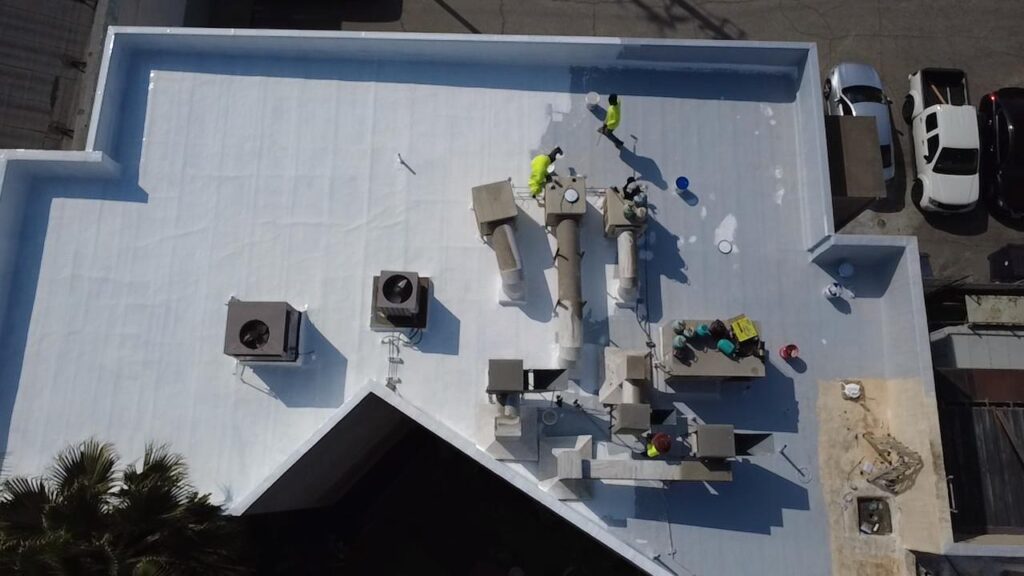
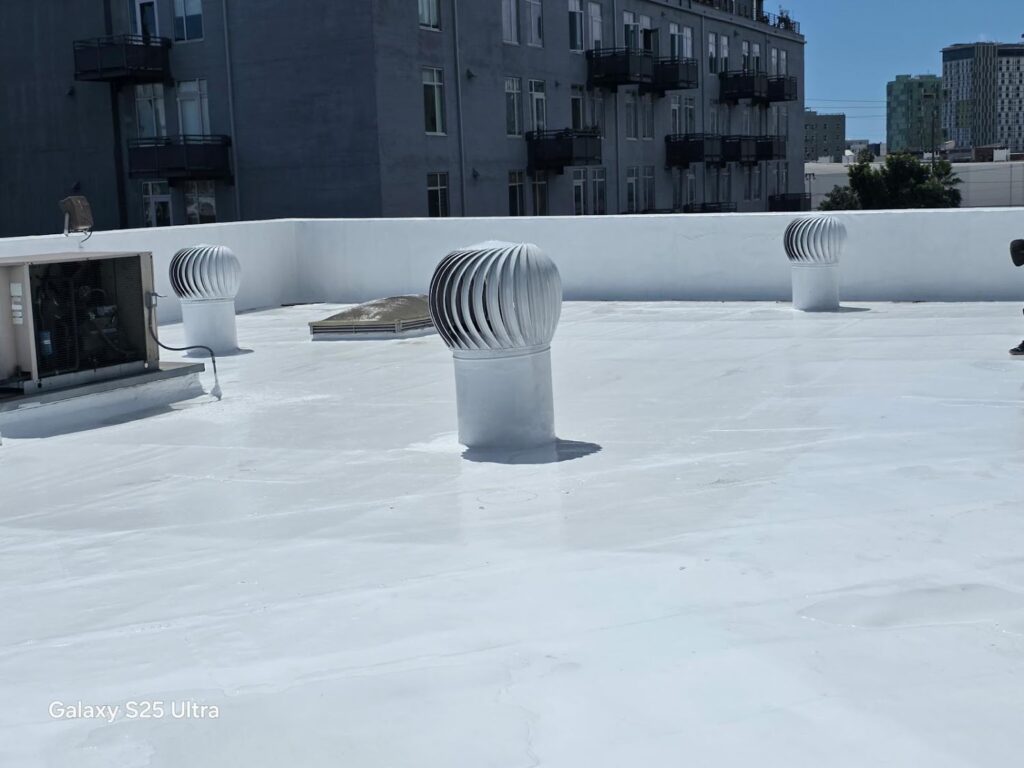
Overhead Roofing is an ASC Certified Contractor, and silicone roof coating systems we apply can qualify for a 20-year manufacturer warranty, subject to the manufacturer’s warranty terms. Our license, CSLB #1119699, is active in the C-39 Roofing classification, and our team brings 25+ years of roofing experience. The photos on this page come from a commercial silicone roof coating job in Los Angeles.
Choose the page that matches your roof: flat roof silicone coating for torch-down, built-up, TPO, and foam roofs, silicone metal roof coating for corrugated and standing seam metal, and commercial roof coating for warehouses, stores, and office buildings. A coating does not repair a roof, so active leaks get a flat roof repair first.
ASC Certified Contractor
20-year, subject to terms
CSLB #1119699 (C-39)
Commercial roof, Los Angeles
Flat roof silicone coating
Silicone over torch-down, built-up, TPO, and foam roofs on homes, garages, and apartment buildings.
Metal roof silicone coating
Rust treatment, fastener and seam sealing, then silicone on corrugated and standing seam metal roofs.
Commercial roof coating
Silicone restoration for warehouses, stores, offices, and industrial roofs, planned around your tenants.
What a Silicone Roof Coating Does and Which Roofs It Fits
A silicone coating goes on as a liquid and cures by drawing moisture from the air into a rubbery, continuous membrane over the existing roof. It stretches and recovers as the roof heats and cools, it is usually white, and it is made to tolerate standing water that breaks down many other coatings.
California’s building code allows a new protective coating over these roofs without tearing off the existing roofing:
- Modified bitumen and torch-down roofs
- Built-up roofs, once loose gravel is removed
- Metal roof panels and metal shingles
- Spray polyurethane foam roofs
- TPO and other single-ply roofs
- Roofs that already have a coating
The roof under the coating still has to be dry and sound. Wet insulation, a soft deck, or blisters and splits across most of the roof point to a flat roof replacement instead, because a coating would seal the moisture in. We do not coat shingle or tile roofs. On a tile roof, the underlayment beneath the tile is the waterproof layer, and a coating on the tile never reaches it.
Silicone vs. Acrylic Roof Coatings
Silicone and acrylic are the two coatings most often used to restore low-slope roofs. Both are elastomeric, but they behave differently on a roof that holds water:
| Topic | Silicone roof coating | Acrylic roof coating |
|---|---|---|
| Base | Silicone polymer that cures with moisture in the air | Water-based acrylic |
| Standing water after rain | Made for use where water ponds | Breaks down over time where water ponds |
| Recoats and repairs later | Only silicone bonds to silicone | Recoated after cleaning, per the maker’s instructions |
| Usual fit | Flat roofs with low spots and slow drains | Roofs that drain well, including many metal roofs |
Each product’s data sheet sets its primer, coverage rate, and weather limits.
The recoat rule matters over the life of the roof. Once a roof has silicone on it, later repairs and recoats have to be silicone too, so the choice of coating also decides what the roof can take in the future.
How We Apply a Silicone Roof Coating
Most of a coating job is preparation. These are the steps, in order:
Test cores and a dry-roof check
Small cores cut through the roof show how many layers are there and whether the insulation is dry. Wet sections are cut out and replaced with new insulation and roofing before any coating goes on, because silicone over wet material would trap the water against the deck.
Cleaning down to a bare surface
Dust, chalky residue, loose granules, oil, and grease all keep silicone from bonding. The roof is pressure washed, loose material is scraped off, and the surface dries completely. Areas around kitchen exhaust fans and HVAC units usually take extra cleaning.
Repairs and reinforced details
Open seams, blisters, and splits are cut out and patched. Seams, flashings, and penetrations are reinforced with fabric set into a base coat, pitch pans are filled, and metal edges are primed. The silicone covers these details, so each one has to be sound first.
Primer and an adhesion test
Some roof surfaces need a primer before silicone will bond, and the product’s data sheet says which. On an older roof, we coat a small test area and pull it after it cures to confirm the bond before coating the whole roof.
Silicone at the specified thickness
The coating is sprayed or rolled at the coverage rate the manufacturer lists, which sets its finished thickness. Thin spots wear through first, so coverage is checked as the work goes, and seams and low areas get extra material where the specification calls for it.
Cure time and a final walk
Silicone needs dry weather to cure, and a common rule is no coating when rain is forecast within 24 hours. After it cures, we walk the roof, clear the drains and scuppers, and give you photos and a written note of the product used.
Call (877) 557-7778, or use the form below. Office hours are Sunday through Friday, 8 a.m. to 5 p.m.
ASC Certification and the 20-Year Manufacturer Warranty
Overhead Roofing is an ASC Certified Contractor. Silicone roof coating systems we apply can qualify for a 20-year manufacturer warranty, subject to the manufacturer’s warranty terms.
A manufacturer warranty is issued by the coating manufacturer, and its terms decide what it covers. Warranty programs set conditions such as the roof’s condition before coating, the preparation, the products used, and the amount of coating applied. Ask to see the warranty terms before work starts, and keep the warranty papers with your building records.
Our own workmanship warranty covers our installation and is separate from the manufacturer’s warranty. Neither one replaces upkeep: keep drains clear, ask other trades to report any damage they cause on the roof, and book roof maintenance visits so small problems are fixed early.

Cool Roof Rules and Permits for Roof Coatings
California’s Title 24 energy code treats a recoat of a commercial roof like a replacement. On nonresidential buildings, recoating more than half of the roof, or more than 2,000 square feet if that is smaller, brings in the cool roof requirements, and the coating has to be rated and labeled by the Cool Roof Rating Council.
In the City of Los Angeles, LADBS lists the application of an approved coating to an existing roof as an express permit item, with no plan check. Other cities in Los Angeles County set their own permit rules.
Coating work is planned for dry weather. In downtown Los Angeles, about 87% of normal yearly rain falls from November through March, so most coating jobs are scheduled from spring through fall.
What Sets the Price of a Silicone Roof Coating
We don’t publish coating prices, because the preparation and repairs before the coating vary more than the silicone itself. These factors set the price:
- Roof size, and how many curbs, pipes, drains, and walls need detailing
- Wet areas to replace, blisters to cut out, and seams to reinforce
- Cleaning, including removing gravel or a failing old coating
- The coating product, any primer, and the thickness the warranty requires
- Access, building height, and getting material onto the roof
- Working around tenants, business hours, and the weather
Estimates are free and written, and they list repairs separately from the coating. Our roof cost guide covers regional roofing prices reported by public sources.
Our Reviews
Posted on GoogleTrustindex verifies that the original source of the review is Google. I live in Alhambra and had a few broken tiles after a windstorm. William and Mike from Overhead Roofing Inc came highly recommended, and now I know why. They handled the repairs quickly and thoroughly, and even checked nearby spots without being asked. Sherry from the office made billing and follow-up a breeze. I’ll be using them again for a full re-roof in the futurePosted on GoogleTrustindex verifies that the original source of the review is Google. Great, thank youPosted on GoogleTrustindex verifies that the original source of the review is Google. Our office in Sierra Madre started having ceiling leaks. Overhead Roofing Inc sent Sean and Mike, who discovered the issue was actually with the parapet wall flashing. They fixed it and gave us solid maintenance recommendations. Tammi kept everything on time and within budget. Their knowledge and clarity made a huge difference.
Ask About a Silicone Roof Coating
Send us the address, the roof type, its rough size and age, and any leaks or standing water you have seen, plus photos if you have them. Call (877) 557-7778 or use the form. Estimates are free, and we are an ASC Certified Contractor.
Get Your Free Estimate
Please fill out the form below, or call: (877) 557-7778
Please fill out the form below, or call:
(877) 557-7778
Need Roof Repair or Replacement? Get a Free Estimate Today!
Don’t wait until a minor issue turns into a significant expense. At Overhead Roofing CA, we make it easy to get expert service fast with no pressure and no hidden fees. From routine roof maintenance to full tear-offs and installations, our team handles every project with precision, honesty, and care.
We specialize in helping LA homeowners and business owners protect their most valuable assets with dependable roofing solutions that last. Our licensed contractors are standing by, ready to inspect your roof, answer your questions, and provide a clear action plan all at no cost to you.
Residential roof repair & replacement
Commercial roofing inspections & upgrades
Emergency leak response & storm damage repair
Financing options available for every budget
Silicone Roof Coating Questions
How long does a silicone roof coating last?
It depends on the thickness applied, the roof’s condition, sun exposure, foot traffic, and how well the roof drains. Silicone systems we apply can qualify for a 20-year manufacturer warranty, subject to the manufacturer’s warranty terms, and the warranty term follows the system that was specified. Regular maintenance and a silicone recoat before the top layer wears through keep the roof protected longer.
Can silicone be applied over my existing roof?
Often, yes. California’s building code allows a coating over modified bitumen, built-up, metal, foam, single-ply, and previously coated roofs without a tear-off. The existing roof has to be dry, well attached, and sound. Test cores show whether the insulation is wet, and wet or failing areas are replaced before coating. We do not coat shingle or tile roofs.
Is silicone better than acrylic for a flat roof?
On a flat roof where water sits after rain, silicone is usually the better fit, because it is made for ponded areas and acrylic breaks down where water stands. On a roof that drains well, acrylic can work. The trade-off with silicone is that later repairs and recoats must also be silicone, since other materials do not bond to it.
Will a silicone coating stop my roof from leaking?
Not by itself. A coating seals the surface of a roof that is already working. Leaks are traced and repaired first, and wet insulation or damaged decking is replaced. Once the roof is dry and sound, the coating adds a continuous waterproof layer over the seams, fasteners, and details where leaks often start later.
Can people walk on a silicone-coated roof?
Light foot traffic for service is fine, but silicone is slippery when wet, and heavy traffic wears it down. Paths that HVAC and solar technicians use often can get walkway pads that are compatible with silicone. Ask other trades to tell you when they work on the roof so any damage is repaired early.
Do you offer silicone roof coating near me?
We work across Los Angeles County from offices in Pasadena and Tarzana, and we also serve Orange and Ventura counties. Send us the address, the roof type, its rough size, and photos if you have them, and we will set up a visit to check the roof and give you a free written estimate.
Serving All of Southern California
Choose your county to see the cities and roofing services near you.