

Metal roofing has become a common choice for California homes, from modern hillside houses to ranch homes in the San Fernando Valley. It lasts a long time, sheds water fast, and many systems carry a Class A fire rating. It also costs more up front than asphalt shingles, and the type of metal roof matters as much as the material.
This guide covers the types of metal roofing, the benefits of a standing seam metal roof, the pros and cons for California homes, fire and cool roof rules, and what drives the cost.
Types of Metal Roofing for Homes
| Type | How it is attached | Look | Notes |
|---|---|---|---|
| Standing seam | Concealed clips under raised seams; no screws through the panel face | Clean vertical lines | The most common premium metal roof on homes |
| Exposed-fastener panels (corrugated, R-panel) | Screws with rubber washers through the panel face | Ribbed or wavy | Lower cost; the washers age and need replacing over the roof’s life |
| Stone-coated steel | Interlocking panels over battens or a deck | Looks like shake, tile, or shingle | Quieter look for traditional homes and HOA areas |
| Metal shingles | Interlocking pieces nailed or clipped to the deck | Shingle or slate pattern | Smaller pieces fit complex roofs |
The metal itself is usually coated steel (galvanized or Galvalume) or aluminum. Copper and zinc are used on a smaller number of high-end homes.
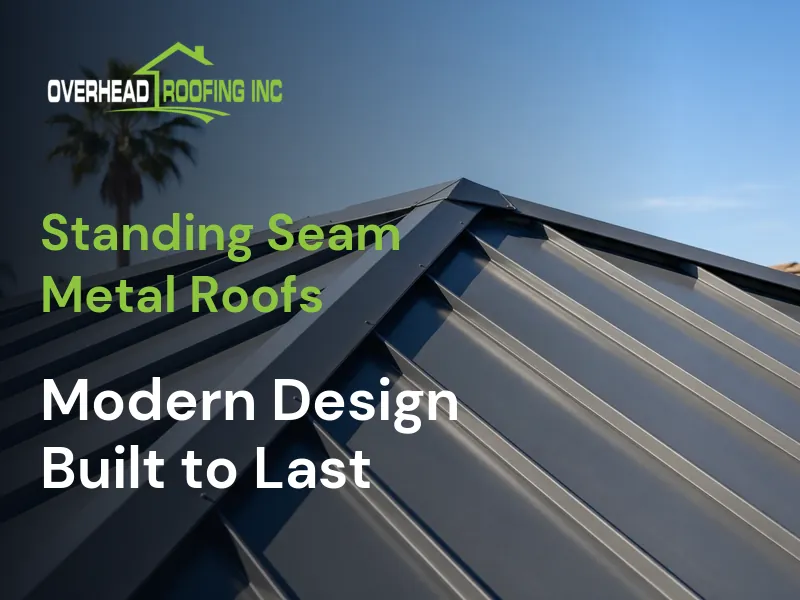
Benefits of a Standing Seam Metal Roof
- No exposed screws. Panels are held by clips under the seams, so there are no screw holes through the roof surface to leak as washers age.
- Room to move. Clips let the panels expand and contract with heat, which matters on a roof that heats up every afternoon.
- Raised seams shed water. The seams stand above the water line and run with the slope, from ridge to eave.
- Long life with little upkeep. InterNACHI, a home inspectors’ association, estimates 40 to 80 years for metal roofs, and a standing seam roof has fewer parts that wear out than an exposed-fastener roof.
- Finishes that hold color. Painted finishes (such as PVDF, sold under names like Kynar 500) resist fading, and many colors are rated as cool roof products.
- Ready for solar. Solar racking can clamp onto the seams without drilling through the panels.
The trade-offs are cost, which is higher than exposed-fastener panels and shingles, and “oil canning,” a visible waviness in the flat part of the panel that is cosmetic, not a leak.

The Pros of Metal Roofing for California Homes
- Lifespan. 40 to 80 years in InterNACHI’s estimate, compared with about 20 to 30 years for asphalt shingles.
- Fire performance. Many metal roof assemblies are tested and listed as Class A, which California requires in Very High Fire Hazard Severity Zones. The rating belongs to the tested assembly, including the underlayment, so ask which listing the bid uses.
- Light weight. Metal weighs much less than clay or concrete tile, so it rarely needs added framing.
- Heat. A light-colored or cool-rated finish reflects much of the sun’s heat, which helps attic temperatures in the inland valleys.
- Wind. Properly fastened panels hold up well to Santa Ana winds.
The Cons of Metal Roofing
- Higher up-front cost than asphalt shingles.
- Salt air near the coast. Steel, fasteners, and cut edges corrode faster near the ocean. Aluminum is often chosen there, and manufacturer warranties often limit coverage close to salt water, so check the distance rule in the warranty. See how ocean air affects roof life.
- Dents. Thin panels can dent from falling branches or foot traffic.
- Installer skill. Flashing at walls, chimneys, skylights, and valleys has to be done for metal; most metal roof leaks start there.
- Noise, sometimes. Over a solid deck with underlayment and attic insulation, a metal roof is not much louder in the rain than other roofs. The reputation for noise comes mostly from metal over open framing, such as barns and patio covers. See quiet roofing materials.
Cool Roof and Fire Rules for Metal Roofs in California
Cool roof. When more than half of a steep-slope roof on a house is replaced in climate zone 4 or 8 through 15, which covers most of inland Los Angeles County, California’s Energy Code calls for an aged solar reflectance of at least 0.20 and a thermal emittance of at least 0.75 (or an SRI of 16), unless an exception applies. Bare, unpainted metal has low emittance, so it usually needs a painted finish with a Cool Roof Rating Council (CRRC) rating to qualify. Many standard colors are rated. See California cool roof requirements.
Fire. In Very High Fire Hazard Severity Zones, the roof must be Class A. Ask for the listed assembly, and make sure ridge vents and eave details keep embers out. See California roofing codes.

What Drives the Cost of a Metal Roof
- The type of system: standing seam costs more than exposed-fastener panels.
- The metal and finish: aluminum and premium painted finishes cost more than standard coated steel.
- Panel thickness (gauge).
- Roof size, slope, and how many valleys, hips, chimneys, and skylights need flashing.
- Tear-off of the old roof and deck repairs found after tear-off.
- Underlayment, especially high-temperature underlayment under metal.
- Permit, cool roof finish, and inspection.
Ask for these items on a written estimate so you can compare bids for the same scope. Our roof replacement cost guide explains the other factors.
How to Choose a Metal Roof for Your Home
- Near the coast: aluminum or a coastal-rated steel system, with stainless or coated fasteners.
- Inland valleys: a cool-rated, light-colored finish to cut heat.
- Fire hazard zones: a Class A listed assembly with ember-resistant vents.
- HOA or traditional styles: stone-coated steel or metal shingles, after HOA approval.
- Long-term ownership: standing seam, for the fewest parts that wear out.
See our metal roof installation in Los Angeles page for how we install it, metal roof repair for an existing roof, and how long roofs last in California to compare materials.
Metal Roofing Questions
Are metal roofs good in California?
For many homes, yes. They last 40 to 80 years in InterNACHI’s estimate, many systems are Class A fire rated, and cool-rated finishes reflect heat. Near the coast, choose aluminum or a coastal-rated system, and check the warranty’s salt water rule.
What are the benefits of a standing seam metal roof?
No exposed screws through the panels, clips that let the metal expand and contract, raised seams that shed water, a long life with little upkeep, and seams that solar racking can clamp to without drilling.
What is the biggest problem with metal roofs?
Most problems come from flashing at walls, chimneys, skylights, and valleys, and on exposed-fastener roofs, from aging screw washers. Near the coast, corrosion is the other common issue.
Is a metal roof noisy in the rain?
Over a solid deck with underlayment and attic insulation, not much more than other roofs. Metal over open framing, such as a patio cover, is louder.
Does a metal roof meet California's cool roof rule?
It can. Bare metal usually does not, but many painted finishes are rated by the Cool Roof Rating Council at or above the values the Energy Code requires for steep-slope reroofs.
Overhead Roofing installs, replaces, and repairs metal roofs across Los Angeles County, with offices in Pasadena and Tarzana. Call (877) 557-7778 to schedule an inspection and get a written estimate.


