Reviewed by the Overhead Roofing team, CSLB #1119699. Updated November 2026.
This roof inspection checklist is for Los Angeles homeowners getting ready for the 2026–27 El Niño winter. You can do most of it from the ground with binoculars, from a ladder at the gutter line, and from inside the attic, without walking on the roof. It is split by roof type because shingle, tile, and flat roofs fail in different places. A printable one-page version is at the end of this page.
Why Check Your Roof Before This El Niño Winter
Forecasters expect a wet winter in Southern California. In its November 6, 2026, update, UC Agriculture and Natural Resources climate scientist Daniel Swain described this El Niño as already among the strongest on record for the time of year, with more strengthening expected. NOAA’s Winter Outlook, released October 15, 2026, favors wetter-than-average conditions across the southern United States, from California to Florida, for December through February.
A strong El Niño raises the odds of a stormy winter; it does not guarantee one. It also follows a long dry stretch: a federal drought outlook from September 2026 described the Southwest as unusually hot and dry since October 2025. Many roofs have not been tested by heavy rain in more than a year, while leaves, dust, and debris have kept building up in gutters and valleys.
Ground-Level Roof Checklist
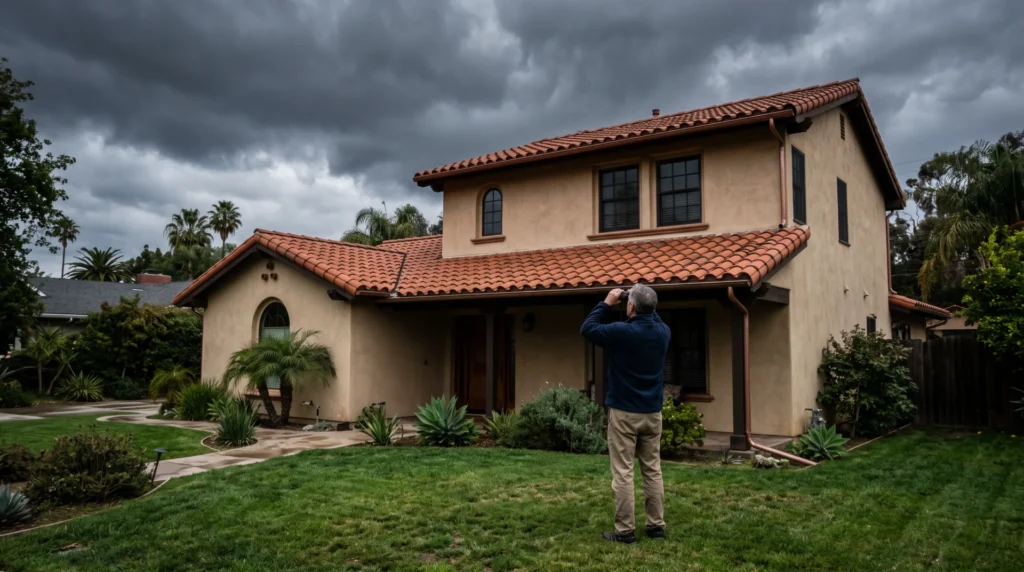
Walk around the house on a dry day and look at every slope you can see. Binoculars help on two-story homes. Check for:
- missing, cracked, or slipped shingles or tiles
- shingle tabs that are lifted or folded back after wind
- bare or dark patches where shingle granules have worn away
- a sagging ridge line or a dip in any roof slope
- bent, rusted, or loose metal flashing at chimneys, walls, and skylights
- cracked rubber collars around vent pipes
- leaves, needles, or debris piled in valleys and behind chimneys
- tree limbs touching the roof or hanging over it
- stains, peeling paint, or soft wood on the fascia and eaves
- debris trapped under solar panels
Take a photo of anything that looks wrong. It helps a roofer judge the problem before the visit, and it gives you a dated record if a storm damages the roof later.
Gutter, Downspout, and Roof Drain Checklist
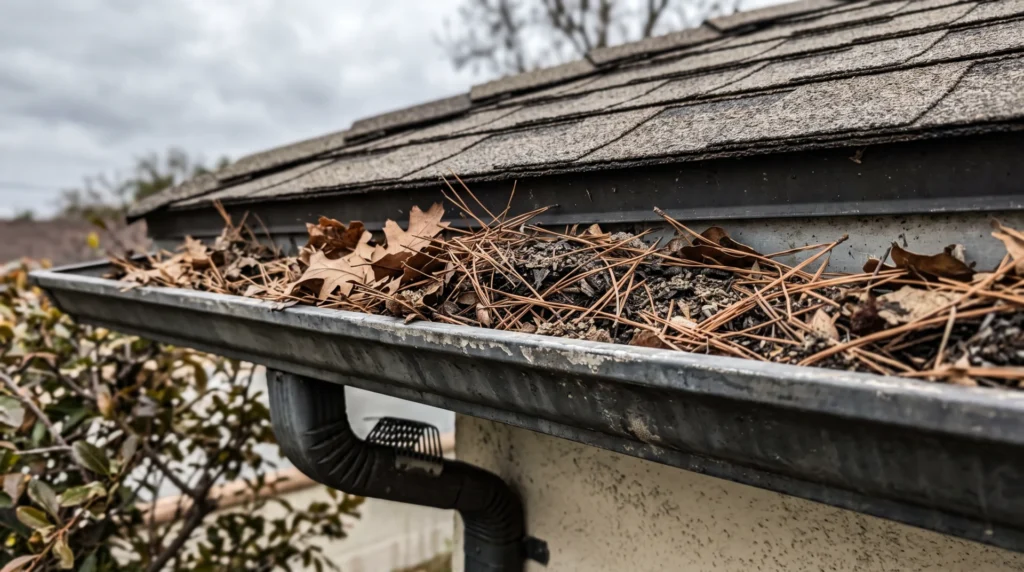
- Gutters cleared of leaves and grit, so water reaches the downspouts
- Gutters firmly attached, with no sagging sections or open seams
- No signs of overflow, such as water stains on the fascia or the wall below the gutter
- Downspouts connected and flowing; flush each one with a hose to check
- Downspouts that discharge away from the foundation, not against it
- On flat roofs: drains, scuppers, and overflow scuppers open, with strainers in place
A clogged gutter can push water back under the roof edge in a heavy storm. If you clean gutters from a ladder, set it on firm, level ground and have someone hold it.
Attic and Ceiling Checklist
On a dry day, take a flashlight into the attic. Step only on the ceiling joists or on boards laid across them. Look for:
- daylight showing through the roof deck
- water stains or dark rings on the roof deck, the rafters or around nails
- damp, flattened, or stained insulation
- rusted nail tips poking through the deck
- stains around the chimney, vent pipes, and skylight openings
- mold or a musty smell
Inside the house, look for brown rings on ceilings, bubbling or peeling paint at the top of walls, and stains around skylights and recessed lights. Our attic inspection page explains what a roofer checks from inside.
Roof Inspection Checklist by Roof Type
| Roof type | Where leaks usually start | What to check before the storms |
|---|---|---|
| Asphalt shingle | Lifted or missing shingles, vent pipe collars, step flashing where the roof meets a wall | Wind damage after Santa Ana events, exposed nail heads, granules collecting at downspout outlets |
| Clay or concrete tile | Worn underlayment under the tiles, cracked or slipped tiles, valleys | Debris in valleys and tile pans, broken tiles at hips and ridges, the eave closures. Check from the ground or the attic; do not walk on tile |
| Flat or low-slope | Drains and scuppers, open seams, flashing at walls and parapets | Water standing more than 48 hours after rain, blisters or cracks in the cap sheet or membrane, clogged drains |
Tiles usually outlast the underlayment beneath them, so a tile roof can look fine from the street and still leak. Our San Marino tile project shows what an underlayment replacement involves. For low-slope roofs, read why standing water on a flat roof shortens its life. Repairs for each type: shingle roof repair, tile roof repair and flat roof repair.
When to Call a Roofer Instead of Checking Yourself
- You already see a stain that grows after rain.
- Several tiles are cracked, or shingles are missing over a large area.
- Any part of the roof sags or feels soft.
- Water stands on a flat roof for days after rain.
- Flashing has pulled away from a wall or chimney.
- The roof is steep, two stories high, or covered in tile.
A roofer can walk the roof safely, lift tiles where needed, and give you a written list of what needs work. See what our roof inspection covers, and how a written roof inspection report is used for a home sale or an insurance renewal.
What Will Fail a Roof Inspection?
For a home sale or an insurance review, inspectors flag problems that let water in or show that a roof is near the end of its life. Common findings include:
- active leaks or fresh water stains in the attic
- missing, broken, or badly worn roofing
- failed or missing flashing
- rotted decking at the roof edge
- standing water on a low-slope roof
- more roof layers than the local code allows
Many insurers also look at the age of the roof. Our guide to insuring a 20-year-old roof in California explains why, and how long roofs last in California gives typical lifespans by material.
Printable El Niño Roof Inspection Checklist
Download the one-page El Niño roof inspection checklist (PDF) and take it outside with you. It has the ground, gutter, and attic checks from this page, with a checkbox for each item and space for notes.
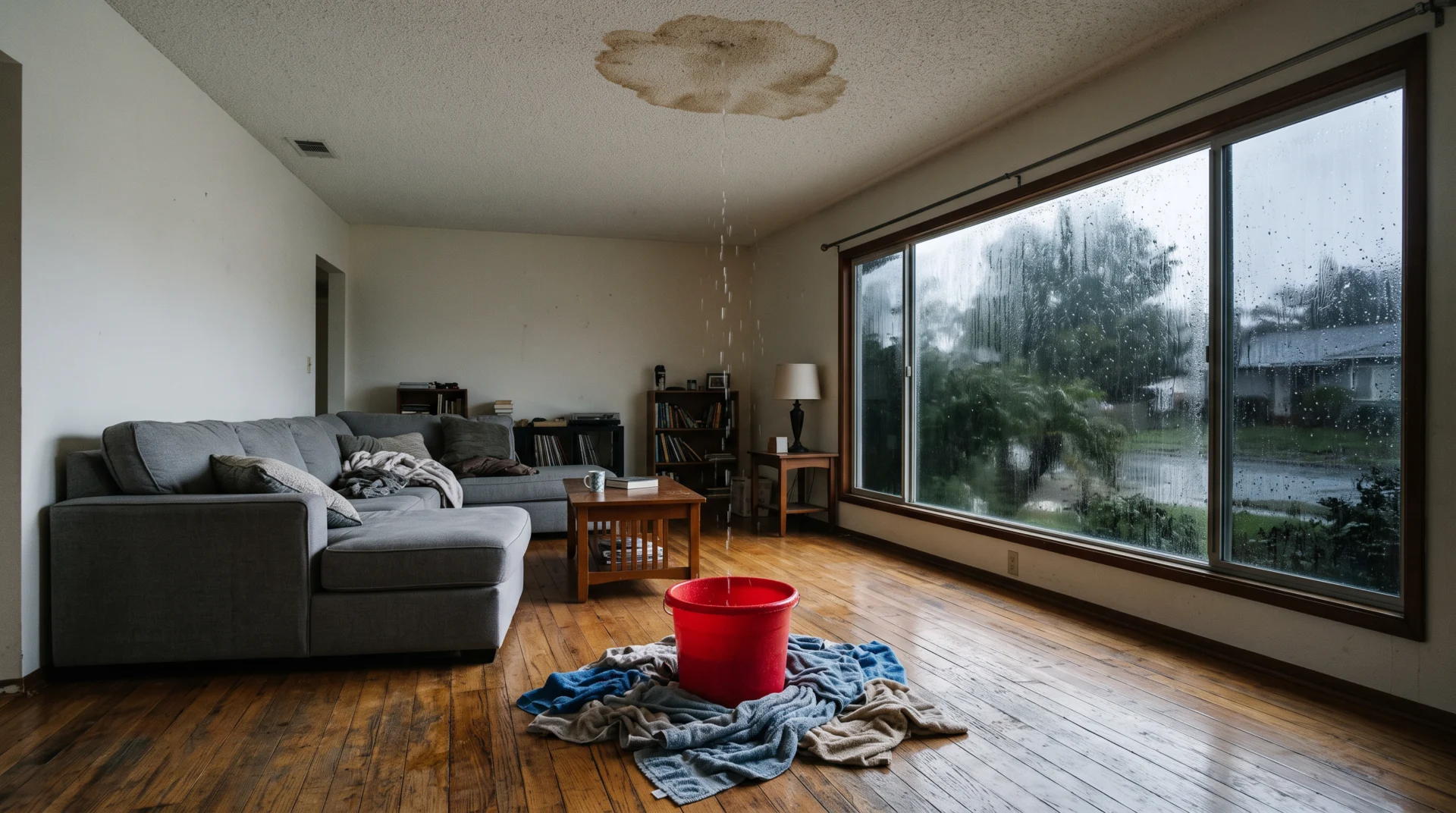
Already dealing with water inside? Our guide on what to do when your roof is leaking covers the first hour, and the seasonal roof maintenance checklist covers the rest of the year.
Roof Inspection Checklist Questions
What should be included in a roof inspection?
A full roof inspection covers the roof surface, the flashing at every chimney, wall, vent, and skylight, the gutters and roof drains, and the underside of the roof deck in the attic. A professional inspection adds a walk on the roof where it is safe and a written list of findings with photos.
How often should a roof be inspected in Southern California?
Once a year before the rainy season, and again after any major windstorm or rainstorm. Tile roofs and older roofs benefit from a check every fall, because problems under the tiles aren’t visible from the ground.
Can I inspect my own roof?
You can do most of the checks on this page from the ground, from a ladder at the gutter line, and from the attic. Leave walking on the roof to a roofer, especially on tile roofs, steep roofs, or roofs on two-story homes, and never walk on a wet roof.
When is the rainy season in Los Angeles?
Most of the rain in Los Angeles falls between November and March. In an El Niño winter, forecasters expect a higher chance of storms in that window, which makes fall the time to check and repair a roof.
Does El Niño always mean more rain in Los Angeles?
No. A strong El Niño raises the odds of a wet winter in Southern California, but it does not guarantee one. NOAA’s 2026–27 Winter Outlook favors wetter-than-average conditions from California to Florida for December through February.
Want a roofer to check it for you? Call Overhead Roofing at (877) 557-7778 to schedule a roof inspection and get a written estimate. Our emergency line is open 24/7.
Sources: UC Agriculture and Natural Resources, November 2026 El Niño Update (Nov. 6, 2026); NOAA, El Nino looms large over U.S. Winter Outlook (Oct. 15, 2026); NIDIS, September 2026 Southern California Drought Outlook.