
Home / Orange County / Anaheim
Roof Repair in Anaheim, CA: Flatland Tracts and Anaheim Hills
Roof repair in Anaheim, CA, covers two very different kinds of homes: hillside houses in Anaheim Hills, inside the wildland-urban interface the Municipal Code places east of SR-55 and south of SR-91, and the 1950s-to-1970s tracts, apartments, and historic districts of the flatlands. Our roofers plan each job around fire exposure on one side of the city and the age of the roof deck on the other.
Licensed, bonded and insured, CSLB #1119699
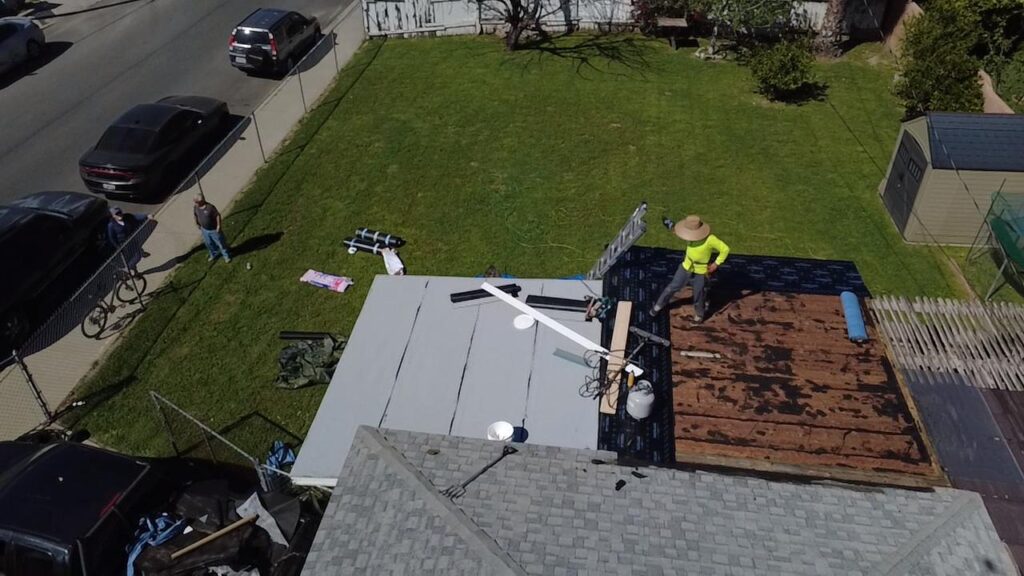
Anaheim Hills is part of the City of Anaheim, not a separate city, so a reroof in the Weir Canyon area and a reroof in the Anaheim Colony go through the same Building Division at City Hall, 200 S. Anaheim Blvd. The two houses face very different conditions, though, and the right roof for each starts with its location.
The housing mix shapes the work too. Multi-unit buildings make up 48.3% of Anaheim’s housing units, against 41.4% for single-family detached homes (ACS 2015-2019), so many roof decisions here are made by apartment owners and property managers.
Anaheim Hills and the wildland-urban interface
Anaheim Municipal Code Chapter 16.40 adopts CAL FIRE’s Very High Fire Hazard Severity Zone map for the city (Ordinance 5523 in 1995, amended by Ordinance 6239 in 2012). The city’s fire hazard zone page describes the wildfire threat as “particularly in east Anaheim,” and the Very High areas follow the hillside and canyon edges, such as the land around Deer Canyon Park Preserve.
CAL FIRE’s March 24, 2025 table for local responsibility areas lists 5,904 acres of Very High, 847 acres of High, and 677 acres of Moderate fire hazard in Anaheim, 7,428 acres in all. The 2011 map showed 7,052 acres of Very High. The city’s fire marshal told ABC7 that the 2025 maps add about 300 acres to Anaheim’s fire hazard zones, all on the east end in Anaheim Hills.
Wildfire has reached Anaheim Hills several times since development began:
- October 1982: the first major fire after development burned 17,000 acres and destroyed 14 homes.
- November 2008: the Freeway Complex Fire spread in from Corona, forced the evacuation of about 3,100 homes in the Weir Canyon area, and burned 14 houses and 86 apartments.
- October 2017: Canyon Fire 2 started on October 9 near the 91 Freeway and Gypsum Canyon Road, likely sparked by embers from the late-September Canyon Fire. It burned 9,217 acres, destroyed 25 structures, and led to the evacuation of more than 5,000 homes across Anaheim Hills, Orange, Orange Park Acres, and Tustin.
A 2025 City of Anaheim environmental document describes the Santa Ana winds here as strong, dry downslope winds that can exceed 75 mph, usually near the end of the dry season. Wind like that carries embers well ahead of a fire, and it also pulls up shingles, ridge cap, and tiles that were already loose.
Planning a Class A reroof in Anaheim Hills
Anaheim Hills started as a planned community. About 4,200 acres of the Nohl Ranch were deeded on October 30, 1970, the first neighborhood, Westridge, opened in July 1972, and most of the area was built in the 1970s using landform grading on the hillsides. Peralta Hills and Mohler Loop are older, built mainly in the 1940s and 1950s, while East Hills and The Highlands came after 1990. Roof construction and age can change from one neighborhood to the next.
When an Anaheim Hills roof is due for replacement, we recommend a Class A fire-rated roof assembly and close attention to the places where embers enter or collect: attic and eave vents, gaps at the eaves and under the ridge cap, and valleys and gutters that fill with leaves. We confirm the roof classification required for the address with the Building Division when we pull the permit.
Two Anaheim Public Utilities rebates and one city program fit well with a hillside reroof (details on the city’s fire safety page):
- Attic vents: a $350 rebate for fire-resistant vents approved on CAL FIRE’s Building Materials Listing.
- Attic insulation: a rebate of $0.35 per square foot, up to $750, for Class 1 (A) fire-rated insulation rated R-30 or higher.
- Home assessment: a free one-on-one visit from the city’s Wildfire Mitigation Specialist.
Vents are easiest to replace while the roof is open during a tear-off, so choose them before the reroof starts.
Flatland tracts and Ranch houses built from 1950 to 1979
Citywide, most of Anaheim’s housing went up in three decades. Anaheim’s 2021-2029 Housing Element shows 23.2% of housing units were built in the 1950s, 17.4% in the 1960s, and 25.4% in the 1970s, and about 70% were built before 1980 (ACS 2015-2019).
The city’s Ranch style guide dates Anaheim’s Ranch houses to about 1935 to 1975 and describes low- to medium-pitched cross-gable and hipped roofs. Traditional Ranch homes often had wood shingles, Contemporary Ranch homes had built-up gravel roofs, and Hacienda Ranch homes had clay tile. Those built-up roofs are low-slope roofs, and torch-down modified bitumen with a mineral cap sheet is a common replacement, the same system we used on a low-slope reroof in Pomona.
On houses this age, the roof deck deserves a close look. Anaheim’s reroof bulletin requires dry-rotted and termite-damaged sheathing to be replaced before the sheathing inspection, so a sound bid for a 1950s or 1960s tear-off includes a plan for decking repairs. Our shingle replacement in Whittier, for example, included new plywood decking.
Historic districts and Mills Act homes
Anaheim’s Historic Preservation program covers four historic districts: Anaheim Colony, Five Points, Historic Palm, and Hoskins. The Colony follows the city’s original 1857 boundary, has its own design guidelines, and includes Ranch houses built on lots that had been subdivided earlier and left vacant.
The city’s Ranch style guide says concrete roof shingles are not an appropriate substitute for wood shingles on Traditional Ranch buildings. Before ordering a new roof for a historic house, talk with Historic Preservation staff; for Mills Act homes, their sign-off is required.
Anaheim's reroof bulletin, step by step
Anaheim’s “When is a Permit Required” bulletin (B804) lists re-roofs as work that needs a building permit and does not list a size exemption for roof repairs. The reroof bulletin (B820) says planning and zoning approval is not required, so the permit is pulled at the first-floor Building counter in City Hall. Here is what the bulletin asks for:
Application
Roofing material and number of squares
Tile roofs
The ICC Evaluation Service Report (ESR) number
Full tear-off
New sheathing size and thickness
Roofing of 6 lb/sq ft or more
Plan check with two sets of stamped engineering calculations, plus framing plans if framing is added
Inspection 102
Roof sheathing, with damaged wood replaced and stamped materials on site
Inspection 199
Final inspection
Source: City of Anaheim Building Division bulletins B804 (2014) and B820 (2010). Building Division (714) 765-5153; inspection requests (714) 765-4626.
The 6-pound threshold matters most when a homeowner wants to move from composition shingles to concrete or clay tile. The 2010 bulletin also limits new roofing to one layer over existing composition or wood shingles and mentions a Reroof Self-Certification pilot program for single-family homes. Because the bulletin is dated, we confirm both points with the Building Division before we file.
What our Anaheim roofers repair and replace
Overhead Roofing handles roof repair, roof inspections, and reroofs for Anaheim homeowners and property owners. The work falls into four groups:
- Anaheim Hills homes: Class A reroofs, vent and flashing upgrades, and repairs to ridge cap, shingles, and tiles loosened by Santa Ana winds.
- Flatland houses: shingle and tile repairs, tear-offs with decking replacement, and shingle-to-tile conversions that go through plan check.
- Apartment and commercial buildings: commercial roof repair and replacement on low-slope roofs, including torch-down systems with reflective cap sheet like the flat roof we installed on an auto service building in Bell, plus silicone roof coatings.
- Leaks and wind damage: 24/7 emergency roof repair in Anaheim, with tarping or temporary sealing first and the permanent repair after.
Roof inspections in Anaheim differ by side of the city. In the hills, we check the covering, vents, and debris buildup with fire exposure in mind; in the flatlands, we look for soft decking, worn flashing, and aging underlayment. When you compare roofing companies in Anaheim, ask how each one handles the sheathing inspection and whether its bid covers decking replacement.
Estimates for Anaheim homes and buildings are free. We work under CSLB license #1119699 (C-39 Roofing), carry bonding and insurance, and hold BBB accreditation with an A rating. Completed jobs come with our workmanship warranty, and the team doing them has 25+ years of roofing experience.
Anaheim roof repair questions, from tile weight to the Colony
Do I need a permit to replace the roof on my Anaheim home?
Yes. The City of Anaheim’s permit bulletin (B804) lists re-roofs as work that requires a building permit. No planning or zoning approval is needed; the permit is pulled at the Building counter on the first floor of City Hall, 200 S. Anaheim Blvd. Expect two inspections, roof sheathing (code 102) and final (code 199), and plan for any rotted decking to be replaced before the first one.
Can I switch my Anaheim house from shingles to clay or concrete tile?
You can, but expect extra steps. Anaheim requires plan check when the new roof covering weighs 6 pounds per square foot or more, which means two sets of stamped engineering calculations, plus framing plans if framing is added. The permit application must also list the tile’s ICC-ES report (ESR) number, so the tile is chosen before the permit is filed.
How do I find out if my Anaheim Hills street is in the Very High fire zone?
Start with the city’s fire hazard zone page and its map of the zones adopted under Municipal Code Chapter 16.40. CAL FIRE’s 2025 map puts 5,904 acres of Anaheim in the Very High zone, and the city’s fire marshal said the roughly 300 acres added in 2025 are all in Anaheim Hills. The city’s Wildfire Mitigation Specialist also offers free one-on-one home assessments.
Does a new roof on a house in the Anaheim Colony need historic review?
If the house is under a Mills Act contract, yes. Since April 16, 2019, exterior work on Mills Act properties needs sign-off from Historic Preservation staff through a Zoning Plan Review Application. For other homes in the Colony, Five Points, Historic Palm, or Hoskins districts, the city advises consulting Historic Preservation staff before any change, and the Colony has its own design guidelines.
How fast can you get to an Anaheim roof after Santa Ana winds?
Our emergency roof repair line runs 24/7, and we respond fast, with same-day visits when crews are available. Santa Ana winds in east Anaheim can top 75 mph near the end of the dry season, which is enough to loosen ridge cap, lift shingles, and shift tiles. The first visit usually means tarping or temporary sealing, then the permanent repair.
More for Anaheim homeowners and property owners
Nearby cities
Roof services for Anaheim homes and buildings
Reviews from our customers on Google
Real reviews left on the Overhead Roofing Google Business Profile.
Posted on GoogleTrustindex verifies that the original source of the review is Google. I live in Alhambra and had a few broken tiles after a windstorm. William and Mike from Overhead Roofing Inc came highly recommended, and now I know why. They handled the repairs quickly and thoroughly, and even checked nearby spots without being asked. Sherry from the office made billing and follow-up a breeze. I’ll be using them again for a full re-roof in the futurePosted on GoogleTrustindex verifies that the original source of the review is Google. Great, thank youPosted on GoogleTrustindex verifies that the original source of the review is Google. Our office in Sierra Madre started having ceiling leaks. Overhead Roofing Inc sent Sean and Mike, who discovered the issue was actually with the parapet wall flashing. They fixed it and gave us solid maintenance recommendations. Tammi kept everything on time and within budget. Their knowledge and clarity made a huge difference.
Get Your Free Estimate
Please fill out the form below, or call: (877) 557-7778
Please fill out the form below, or call:
(877) 557-7778
Need Roof Repair or Replacement? Get a Free Estimate Today!
Don’t wait until a minor issue turns into a significant expense. At Overhead Roofing CA, we make it easy to get expert service fast with no pressure and no hidden fees. From routine roof maintenance to full tear-offs and installations, our team handles every project with precision, honesty, and care.
We specialize in helping LA homeowners and business owners protect their most valuable assets with dependable roofing solutions that last. Our licensed contractors are standing by, ready to inspect your roof, answer your questions, and provide a clear action plan all at no cost to you.