
Overhead Roofing » Roof Replacement
Roof Replacement Services in Los Angeles County
Tear-off to the decking, repairs underneath, and a new shingle, tile, metal, or low-slope roof built from the deck up, for homes and commercial buildings. Estimates are free.
- Licensed, bonded & insured
- CSLB #1119699 (C-39)
- BBB Accredited, A rating
What a Roof Replacement With Us Includes
Roof replacement is the job of removing the old roof down to the decking, repairing what is underneath, and building a new roof from the deck up. Overhead Roofing replaces shingle, tile, metal, and low-slope roofs on homes and commercial buildings across Los Angeles County, and we also work in Orange and Ventura counties.
As a roof replacement company, we price a full roof replacement only after we have looked at the roof, the attic where we can reach it, and the condition of the decking. If a repair would still do the job, we tell you. For homes in the City of Los Angeles, see our page on roof replacement in the City of Los Angeles.
CSLB #1119699 (C-39)
Over 50% of a home's roof
Class A roof covering required
Workmanship warranty

When Replacing the Whole Roof Is the Better Call
Repairs make sense while the damage is limited and the rest of the roof is sound. A full roof replacement starts to make more sense when:
- The roofing is worn out on most slopes, not only where it was damaged
- Leaks keep returning in new places after repairs
- The decking is soft, delaminated, or rotted in more than one area
- The tile is cracked or worn on so many slopes that a tile reset would not save enough of it
- The existing material is discontinued and the damage covers several slopes
Overlays, partial reroofs, and new construction
Not every new roof starts with a tear-off. Covering an existing roof with a new layer (an overlay) is allowed only in limited cases. The California Residential Code does not allow it over two or more existing layers, over a roof that is water-soaked or deteriorated, or over slate or tile. Overlays and partial reroofs are covered on our reroofing page, and roofs for new homes and additions are on our roof installation page.

Choosing a Roofing Material for Your New Roof
Replacement is the natural time to change materials, since the old roof is coming off anyway. The main options:
- Asphalt shingles. Shingles come in many colors and suit most pitched roofs. See shingle roof installation.
- Clay or concrete tile. Tile is long-lived and heavy, so a switch from shingles to tile starts with a structural check. See tile roof replacement.
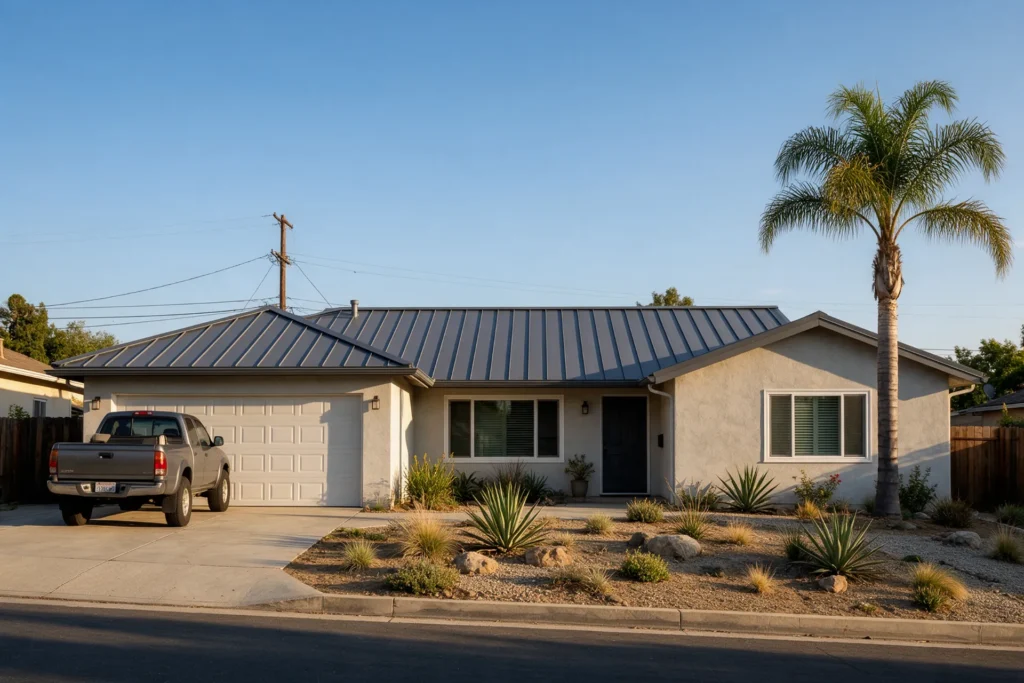
- Metal. Standing seam and other metal panels are light and suit both modern and traditional houses. See metal roof replacement.
- Low-slope roofing. Flat and low-slope sections on additions, apartment buildings, and commercial buildings use membranes such as modified bitumen (torch-down) or TPO. In Pomona, we replaced a low-slope roof with torch-down roofing. See flat roof replacement.
Weight, slope, fire zone, cool roof rules, HOA rules, and budget all narrow the choice, and we review them with you before the estimate is final.
The Roof Replacement Process, Step by Step
Every residential roof replacement we do follows the same sequence:
- Inspection and photos. We inspect the roof, look at the attic where we can reach it, and photograph the problem areas.
- Written estimate. The estimate lists the material, underlayment, flashing, ventilation work, how damaged decking is handled, the permit, and cleanup.
- Permit. A reroof needs a building permit: from LADBS in the City of Los Angeles, and from the local building department in other cities. Many reroofs in the City of Los Angeles qualify for an LADBS express permit, issued without plan check.
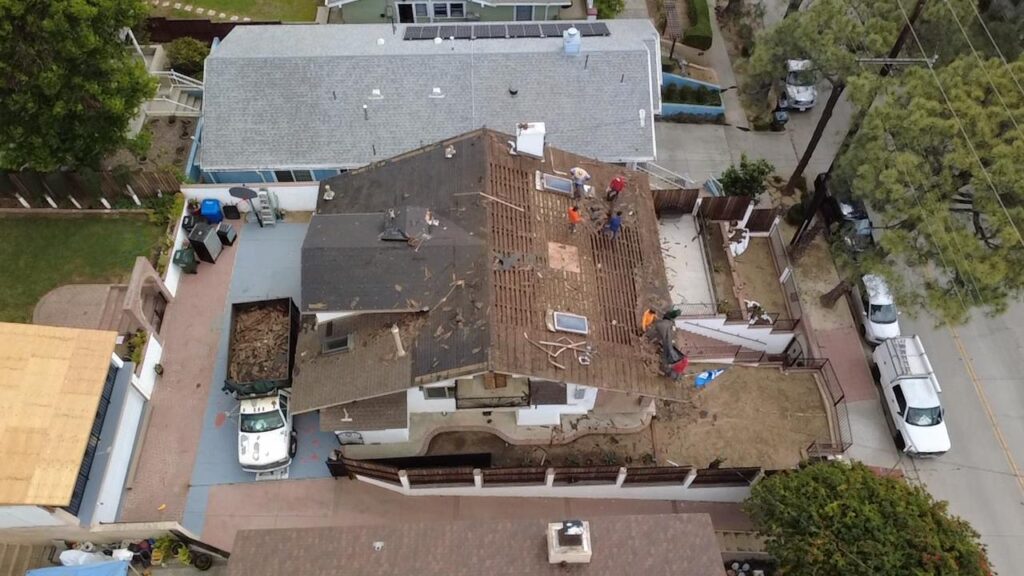
- Tear-off. The old roofing and underlayment come off down to the decking, with tarps protecting landscaping, windows, and walkways.
- Deck inspection and repair. With the deck exposed, we replace rotted, delaminated, or loose sheathing. Our Altadena shingle job needed new decking at the roof edge, where water had gotten in, and the Whittier replacement went on over new plywood.
- Underlayment. New underlayment covers the whole deck and stops water that gets past the roofing.
- Flashing and drip edge. Walls, chimneys, valleys, skylights, and vents get new flashing. On shingle roofs, the California Residential Code requires drip edge at the eaves and rakes.
- Ventilation. Attic intake and exhaust vents are checked and corrected, since an attic that traps heat and moisture is hard on the roof.
- The new roof covering. Shingles, tile, metal, or membrane go on per the manufacturer’s instructions and the code.
- Final inspection and cleanup. The building inspector signs off on the permit, and the crew removes debris and sweeps the property for nails.
On our new shingle roof in Covina, the old shingles were stripped down to the decking before the new roof went on.
Call our 24/7 line. We offer fast response, with same-day visits when crews are available.
Cool Roof Rules That Apply to a Roof Replacement
California’s 2025 Energy Code (Title 24, Part 6) has been in force since January 1, 2026. Under it, replacing more than 50 percent of a home’s roof brings in the cool roof rule in most Los Angeles County climate zones. The new roofing then has to be rated by the Cool Roof Rating Council (CRRC) and meet the minimums for the roof’s slope and zone. Exceptions exist, such as R-38 attic insulation under a steep-slope roof.
Inside the City of Los Angeles, a city ordinance adds its own cool roof rule in every climate zone. LADBS asks for a CRRC-rated and labeled product whenever more than half of a home’s roof is replaced. Zone lines do not follow city limits, and a ZIP code can span two zones, so check the exact address. Our guide to California cool roof requirements lists the values for each slope and zone, the exceptions, and the separate rules for commercial and apartment buildings.
Class A Roofing When You Replace a Roof in a Fire Zone
The 2025 California Wildland-Urban Interface Code (Title 24, Part 7) applies in the fire hazard severity zones it covers, which include every Very High zone. There, a home needs a Class A roof whenever the whole roof is replaced, and also when 50 percent or more of the roof is redone within a 12-month period. Roofing used in a smaller repair must be at least Class A too. In the City of Los Angeles, LADBS calls for Class A roofing in a Very High Fire Hazard Severity Zone and at least Class B in Fire District No. 1. Wood shakes and wood shingles are banned citywide. The State Fire Marshal, part of CAL FIRE, publishes fire hazard severity zone maps that you can search by address, and your building department can confirm the zone.
According to CAL FIRE, common Class A roof coverings include asphalt shingles, tile, and metal panels, and the rating applies to the full roof assembly. Even outside a mapped zone, CAL FIRE recommends choosing a Class A roof when it is time to replace and filling gaps between the roof covering and the sheathing so embers cannot get in. Our guide to California roofing requirements and building codes covers the rest of the code.
What Moves the Price and Schedule of a Replacement
Roofs of the same size can differ a great deal in price, so we quote after seeing yours. These factors move the price and the schedule:
- Size and shape. Hips, valleys, dormers, and chimneys add cutting and flashing work.
- Pitch, height, and access. Steep or tall roofs need more safety setup and take longer to work on.
- Material. Tile and metal cost more to buy and install than asphalt shingles, and tile may need structural work.
- Layers to remove. Each extra layer of old roofing adds tear-off and disposal time.
- Decking. Damaged decking found during tear-off has to be replaced, and we show you photos before adding that work.
- Code requirements. Cool roof products, Class A assemblies, drip edge, and ventilation corrections can all be required.
- Permit and inspections. Plan check, where it applies, and inspection scheduling affect the start and finish dates.
- Weather. We do not leave a roof open when rain is forecast, so a job scheduled between November and March, when most storms arrive, can take longer.
For figures from public sources, see our guide to average roof replacement costs in Southern California. Your written estimate is free.
Insurance Paperwork and the Workmanship Warranty
When wind, a storm, or a fire is the reason for the new roof, check your policy and talk to your insurance company before work begins; coverage is their decision. We photograph the roof before tear-off and write up the estimate, with an inspection report when it helps, so you have documents to submit. If you ask, we will meet the adjuster at the house. Filing, negotiating, and settling the claim stay with you, and a licensed public adjuster can represent you if you want help.
Our roof replacements include a workmanship warranty. Ask for the warranty terms in writing before you sign, and keep them with your permit records.
Our Reviews
Posted on GoogleTrustindex verifies that the original source of the review is Google. I live in Alhambra and had a few broken tiles after a windstorm. William and Mike from Overhead Roofing Inc came highly recommended, and now I know why. They handled the repairs quickly and thoroughly, and even checked nearby spots without being asked. Sherry from the office made billing and follow-up a breeze. I’ll be using them again for a full re-roof in the futurePosted on GoogleTrustindex verifies that the original source of the review is Google. Great, thank youPosted on GoogleTrustindex verifies that the original source of the review is Google. Our office in Sierra Madre started having ceiling leaks. Overhead Roofing Inc sent Sean and Mike, who discovered the issue was actually with the parapet wall flashing. They fixed it and gave us solid maintenance recommendations. Tammi kept everything on time and within budget. Their knowledge and clarity made a huge difference.
Get a Free Roof Replacement Estimate
Tell us the roof type, its approximate age, and anything you have noticed, such as leaks or worn spots. Call (877) 557-7778 or use the form below. Overhead Roofing is licensed, bonded, and insured (CSLB #1119699, C-39), and estimates are free.
Get Your Free Estimate
Please fill out the form below, or call: (877) 557-7778
Please fill out the form below, or call:
(877) 557-7778
Need Roof Repair or Replacement? Get a Free Estimate Today!
Don’t wait until a minor issue turns into a significant expense. At Overhead Roofing CA, we make it easy to get expert service fast with no pressure and no hidden fees. From routine roof maintenance to full tear-offs and installations, our team handles every project with precision, honesty, and care.
We specialize in helping LA homeowners and business owners protect their most valuable assets with dependable roofing solutions that last. Our licensed contractors are standing by, ready to inspect your roof, answer your questions, and provide a clear action plan all at no cost to you.
Residential roof repair & replacement
Commercial roofing inspections & upgrades
Emergency leak response & storm damage repair
Financing options available for every budget
Roof Replacement Questions From Homeowners
Do I need a permit to replace my roof?
Yes. A roof replacement needs a building permit from the city where the home is located, or from LADBS in the City of Los Angeles. We include the permit in the job and schedule the inspections. The permit is how the city confirms that the new roof meets current code, including the cool roof and fire rating rules, and a closed permit is useful to have when you sell the house.
How long does a roof replacement take?
It depends on the roof’s size, the material, how many layers come off, how much decking needs replacing, and the weather. A shingle roof on a single-family home is usually the quickest; tile, metal, and jobs that need structural work or plan check take longer. Your written estimate includes an expected schedule, and we tell you if rain or hidden damage changes it.
Do I need to be home during a roof replacement?
No, but someone should be reachable by phone. Before work starts, move cars out of the driveway, take fragile items off walls and shelves (hammering carries through the house), and cover anything stored in the attic, because dust and debris from the old roof can fall through. Keep pets and children away from the work area while the crew is tearing off and loading debris.
Can a roof be replaced during the rainy season in Los Angeles?
Yes. Even in the wettest months there are dry stretches between storms. In the rainy season we watch the forecast and open only as much roof as we can cover with underlayment before the crew leaves. If the roof is already leaking, waiting for summer can let water damage the decking and ceilings.
How do I compare residential roof replacement bids?
Line them up item by item: tear-off or overlay, how damaged decking is priced, the underlayment, which flashings are replaced, drip edge, ventilation work, the roofing product and its fire and cool roof ratings, the permit, cleanup, and the warranty terms. When one bid is much lower than the others, check which of those items it leaves out. Ask each roof replacement contractor to put the full scope in writing.
Serving All of Southern California
Choose your county to see the cities and roofing services near you.