
Overhead Roofing » Structural Roof Repair
Structural Roof Repair in Los Angeles
Repairs to roof decking, rafters, trusses, and ridge beams on Los Angeles homes and buildings, during a leak repair or a reroof. Estimates are free.
- Licensed, bonded & insured
- CSLB #1119699 (C-39)
- BBB Accredited, A rating
Roof Decking and Structural Damage in LA Homes
Structural roof repair deals with the parts that hold a roof up: the decking (sheathing) the roofing is fastened to, and the rafters, trusses, and ridge underneath. Water is a common cause, since a leak that runs for months can rot the decking and, given time, the framing below it. We replace damaged decking during repairs and reroofs across Los Angeles County, and when the framing is damaged, we document what we find and explain the next step.
If part of the roof has dropped suddenly, or a ceiling below a sag is cracking or bulging, keep everyone out of that area and call (877) 557-7778, day or night. For a slow sag, a soft spot, or old water stains, the sections below explain what each one can mean.
Needs an LADBS permit
Solid sheathing (CRC R905.2.1)
Altadena and Whittier jobs
CSLB #1119699 (C-39)
What Counts as Structural Roof Damage, and What Doesn't
Structural damage affects the parts of a roof that carry weight:
- Decking. Plywood, OSB, or board sheathing that is rotted, delaminated, broken, or sagging between rafters
- Rafters and trusses. Framing members that are cracked, split, rotted, or damaged by termites, or connections that have pulled apart
- The ridge. A ridge board or ridge beam that has dropped, cracked, or rotted
Damage to the roofing alone is not structural. A cracked shingle, a broken tile, worn underlayment, or a loose pipe boot can cause a leak, and a leak left long enough can cause structural damage. The fix for the roofing itself, though, is ordinary roof repair.
The difference matters because it decides who does the work and who signs off on it. Decking is replaced as part of roofing work. Repairs to rafters, trusses, or a ridge beam are framing repairs that need a building permit and often a structural engineer’s design.
Signs of a Sagging Roof or Damaged Roof Structure
From the street, look along the ridge and across each roof plane:
- A ridge line that dips in the middle or at one end
- A roof plane that looks wavy or dished between rafters
- Fascia and gutters that have dropped or pulled away from the house
From the attic, with a flashlight, and stepping only on framing:
- Daylight showing through the roof boards
- Dark water stains or white mineral marks on rafters and decking
- Decking that is soft, flaking, or bowed between rafters
- Rafters that are cracked or split, or connections with nails pulled partway out
- Small piles of pellets below the wood, which can point to drywood termites
Inside, watch for new ceiling cracks and for water stains that grow after each rain. Soft or spongy spots on the roof mean the decking has lost strength, but leave that test to a roofer. An attic inspection is the simplest way to see the structure itself.
Call our 24/7 line. We offer fast response, with same-day visits when crews are available.
What Causes Roof Structure Damage in Los Angeles
Long-term leaks and rot
A small leak at a flashing or pipe boot can drip on the same spot of decking for years. Plywood delaminates, boards rot, and eventually the water reaches the rafters. Because the rain comes mostly in winter, wet wood can stay damp for months and then dry out over the summer, so a stain that looks old may still be growing.
Termites
Drywood termites are common along California’s coast and into the deserts of Southern California. They live inside dry wood without needing soil contact, so they can infest wood far from the ground, while dampwood termites go after wood kept wet by leaks. UC’s pest management program notes that termite-damaged load-bearing wood may call for an architect, engineer, or general contractor.
Heavy roofing and added loads
Clay and concrete tile weigh far more than asphalt shingles, and the California Residential Code requires the roof structure to carry the new covering during a reroof. In the City of Los Angeles, LADBS issues an express reroof permit, without plan check, only for Class A or B roofing under 6 pounds per square foot. Read more about switching from shingles to tile.
Fire and earthquakes
Fire can char rafters and decking even where the roofing still looks whole from the street, and in the City of Los Angeles, fire damage repairs need a permit. Earthquakes can shift framing and crack masonry. FEMA describes masonry chimneys in wood-frame houses as extremely vulnerable to earthquake shaking, and a chimney that cracks or shifts can damage the decking and flashing around it.
Roof Decking Repair and Replacement During a Reroof
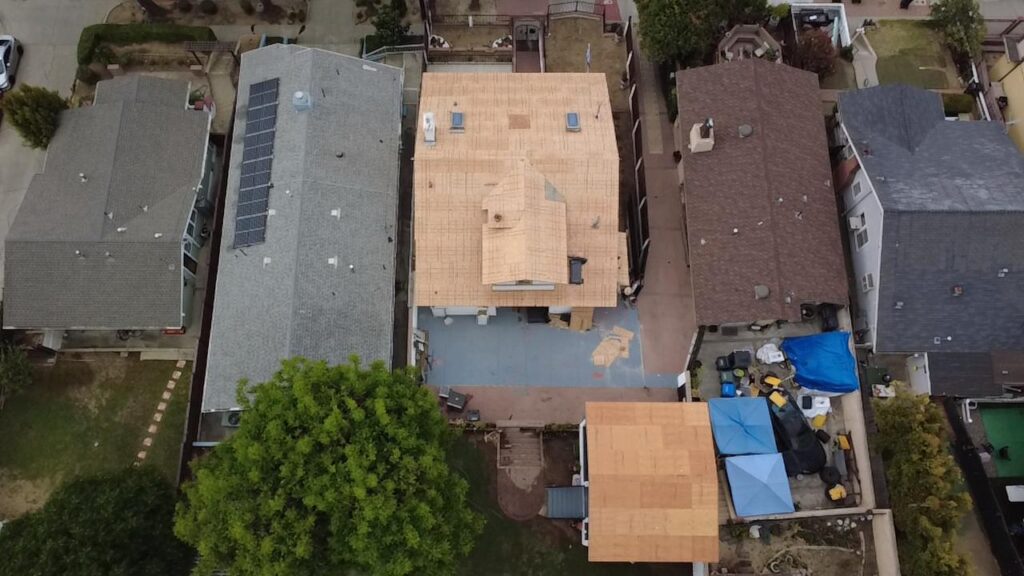
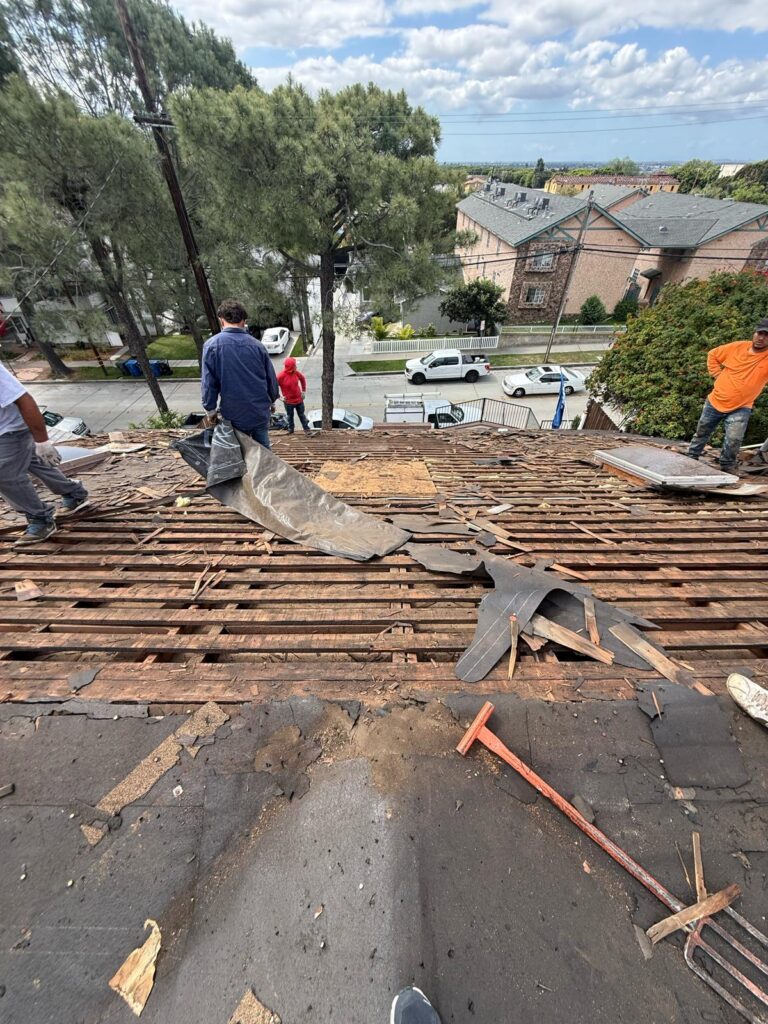
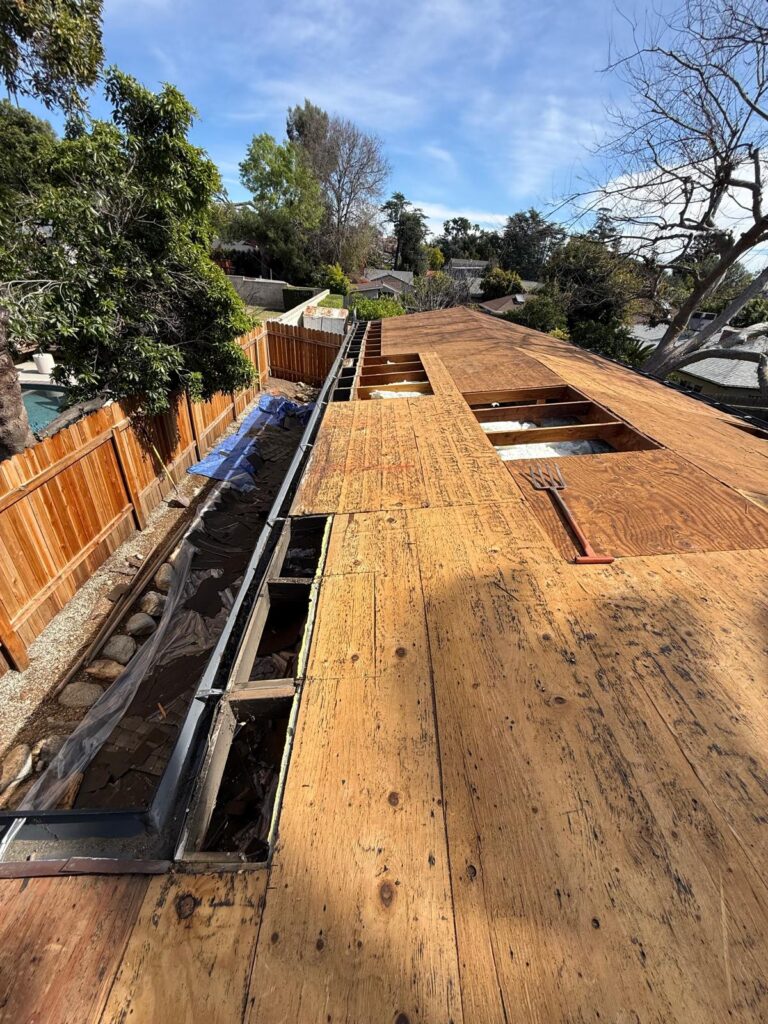
Decking damage is usually found during a tear-off, when the old roofing comes off and the whole deck is visible. We walk the bare deck, mark boards or panels that are soft, rotted, delaminated, or cracked, and replace them before the underlayment goes down. In Altadena, stripping an old shingle roof exposed water-damaged decking along the roof edge, and those sections were cut out and replaced. A Whittier shingle replacement included new plywood decking.
Roof edges are a common place for rot, because water that gets past a worn drip edge or backs up out of a clogged gutter soaks the bottom of the deck. Some older homes also have spaced board sheathing left from a wood shake roof. The code requires wood structural panels or solid lumber sheathing under asphalt shingles, so new plywood goes on as part of the reroof.
A roof decking repair can also be done without a full reroof, for example under one leaking valley. The roofing over the area comes off, the bad decking is cut out back to the rafters, new decking goes in, and the area is roofed to match. For decking materials and thickness, see roof decking explained.
How decking work is priced
Decking cost depends on how much has to be replaced, which is not fully known until the old roofing is off, plus the roof’s size, pitch, and access. When decking is part of a full roof replacement, ask for the rate for extra decking to be written into the estimate. Our guide to roof replacement costs in Southern California covers the other factors.
Roof Rafter Repair, Trusses, and Ridge Beams
We replace decking. We don’t repair rafters, trusses, or ridge beams. When we find damaged framing, we photograph it, note where it is and how far it seems to run, and explain what comes next. That usually involves three things:
- A building permit. In the City of Los Angeles, replacing damaged framing members needs an LADBS permit. For houses and duplexes, it is an express permit without plan check when the work is under 10% of the building’s replacement cost; larger jobs go through plan check. Other cities have their own rules.
- An engineer’s design, in many cases. A sagging ridge, cracked rafters, or damaged trusses are often repaired to a structural engineer’s design that shows how members are sistered, replaced, or braced.
- A contractor who does framing. The framing is repaired first and inspected under the permit, and then the decking and roofing go back on.
LADBS lists these permit types in its express permit bulletin. If framing damage turns up in the middle of a reroof, the reroof pauses until the framing is repaired and inspected, and the open area is covered in the meantime.
Documenting Structural Damage for Your Insurer
Read your policy and call your insurer before permanent repairs start; only your policy and your insurer can say what is covered. What we can give you is the record: photos of the damage before anything is removed, a written description of what we found and where, an inspection report where it helps, and a written estimate you can send to your insurer. If you ask, we can meet the adjuster at the property.
We don’t file, negotiate, or settle claims. In California, only a licensed public adjuster may negotiate a claim on a homeowner’s behalf, and you can also hire a lawyer. The California Department of Insurance’s Residential Property Claims Guide explains the process.
Our Reviews
Posted on GoogleTrustindex verifies that the original source of the review is Google. I live in Alhambra and had a few broken tiles after a windstorm. William and Mike from Overhead Roofing Inc came highly recommended, and now I know why. They handled the repairs quickly and thoroughly, and even checked nearby spots without being asked. Sherry from the office made billing and follow-up a breeze. I’ll be using them again for a full re-roof in the futurePosted on GoogleTrustindex verifies that the original source of the review is Google. Great, thank youPosted on GoogleTrustindex verifies that the original source of the review is Google. Our office in Sierra Madre started having ceiling leaks. Overhead Roofing Inc sent Sean and Mike, who discovered the issue was actually with the parapet wall flashing. They fixed it and gave us solid maintenance recommendations. Tammi kept everything on time and within budget. Their knowledge and clarity made a huge difference.
Get an Estimate for Structural Roof Repair
Tell us what you have noticed: a sagging roof line, soft spots, or stains on the rafters or ceiling. Call (877) 557-7778 or use the form below. Overhead Roofing is licensed, bonded, and insured (CSLB #1119699, C-39), and estimates are free.
Get Your Free Estimate
Please fill out the form below, or call: (877) 557-7778
Please fill out the form below, or call:
(877) 557-7778
Need Roof Repair or Replacement? Get a Free Estimate Today!
Don’t wait until a minor issue turns into a significant expense. At Overhead Roofing CA, we make it easy to get expert service fast with no pressure and no hidden fees. From routine roof maintenance to full tear-offs and installations, our team handles every project with precision, honesty, and care.
We specialize in helping LA homeowners and business owners protect their most valuable assets with dependable roofing solutions that last. Our licensed contractors are standing by, ready to inspect your roof, answer your questions, and provide a clear action plan all at no cost to you.
Residential roof repair & replacement
Commercial roofing inspections & upgrades
Emergency leak response & storm damage repair
Financing options available for every budget
Structural Roof Repair Questions
What is considered structural damage to a roof?
Structural damage is damage to the parts that carry the roof’s weight: the decking, the rafters or trusses, and the ridge. Rotted or delaminated decking, a sagging ridge, cracked rafters, and termite-damaged framing all count. A cracked shingle, a broken tile, or a worn pipe boot does not, although the leak it causes can lead to structural damage if it runs long enough.
Can a sagging roof be repaired without replacing the whole roof?
It depends on what is sagging. If the decking has softened and dips between rafters, the roofing over that area comes off, the decking is replaced, and the area is roofed to match. If the ridge or the rafters have sagged, the framing is repaired first under a permit, often to an engineer’s design, and then the roofing over it is repaired or replaced.
Do you do roof rafter repair?
No. We replace roof decking, but we don’t repair rafters, trusses, or ridge beams. When we find damaged framing, we photograph it, describe where it is and how far it seems to go, and explain the next step. That usually means a permit, often an engineer’s design, and a contractor who does framing. Once the framing is repaired, we can handle the decking and roofing.
Do I need a permit for structural roof repair in Los Angeles?
For framing, yes. In the City of Los Angeles, replacing damaged framing members and repairing water, termite, dry-rot, or fire damage need an LADBS permit. On houses and duplexes, repairs under 10% of the building’s replacement cost can get an express permit without plan check. A reroof, including new decking, also needs an LADBS permit. Other cities have their own building departments.
Can new roofing go over damaged decking?
No. The California Residential Code does not allow a new roof covering to go over an existing roof that is water-soaked or deteriorated, and new roofing needs a sound deck to hold its fasteners. Damaged decking is cut out and replaced first. That is one reason a full tear-off is often the better choice when a roof has had long-running leaks.
Serving All of Southern California
Choose your county to see the cities and roofing services near you.